Microclimates and Zone Discrepancies Across New Jersey Yards
New Jersey microclimates can make nearby yards behave differently; use hardiness zones as a starting point and match plants to local conditions.
Know when to plant.
Hardiness zones, frost dates, month-by-month garden tasks, planting and harvest times by crop, and when to water.
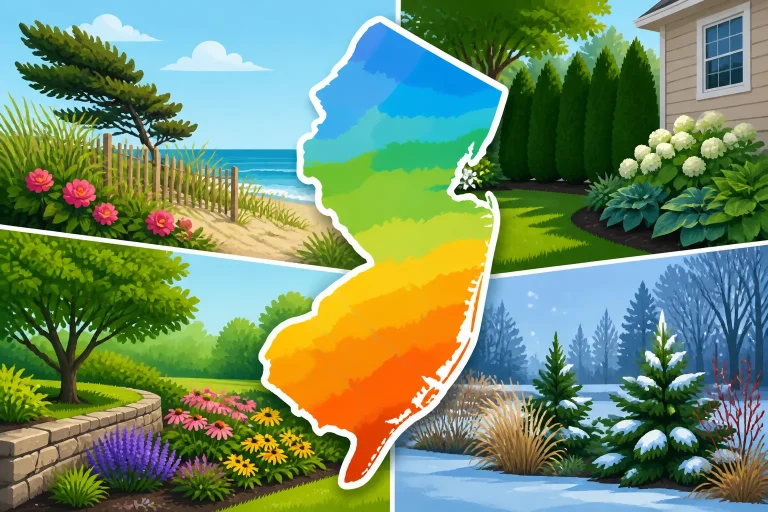
New Jersey microclimates can make nearby yards behave differently; use hardiness zones as a starting point and match plants to local conditions.
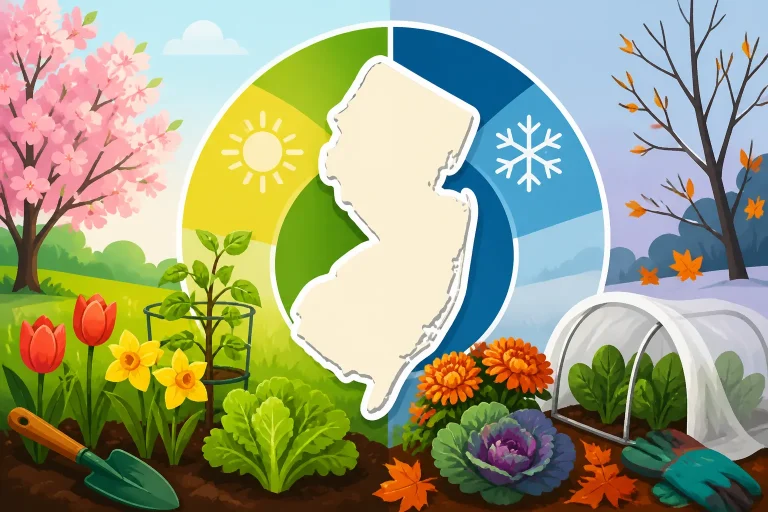
New Jersey freeze timelines are planning clues, not guarantees; use local probabilities, crop tolerance, and yard conditions to time planting and harvest.
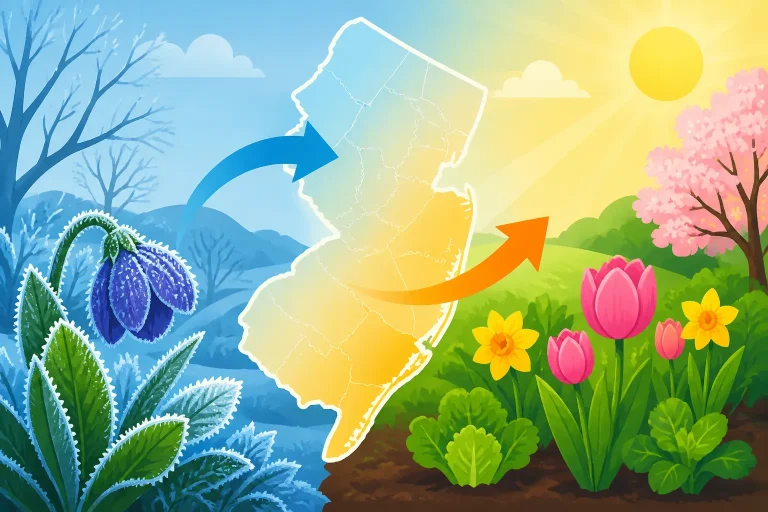
New Jersey’s last spring frost varies by region and yard. Use regional dates as planning cues, then match crops to local weather and site conditions.
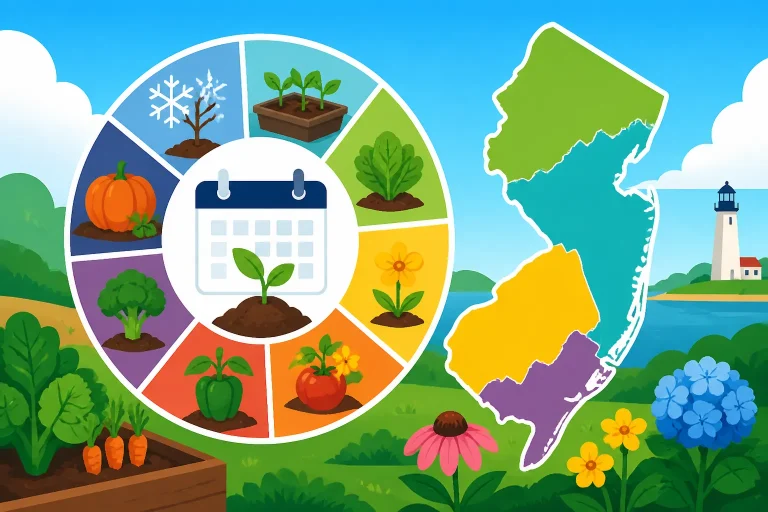
New Jersey planting windows vary by region, soil, and frost risk; use local conditions to time crops and protect tender plants through the season.
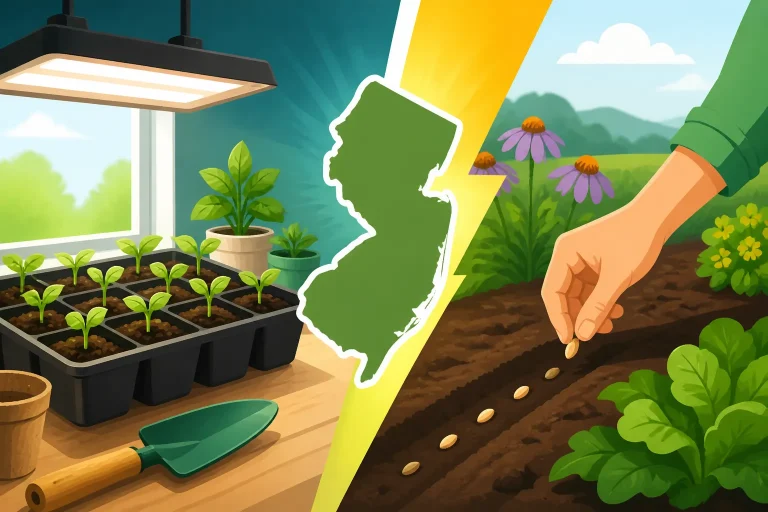
Starting seeds indoors vs direct-sowing in New Jersey depends on the crop, frost risk, soil conditions, and your garden’s local microclimate.
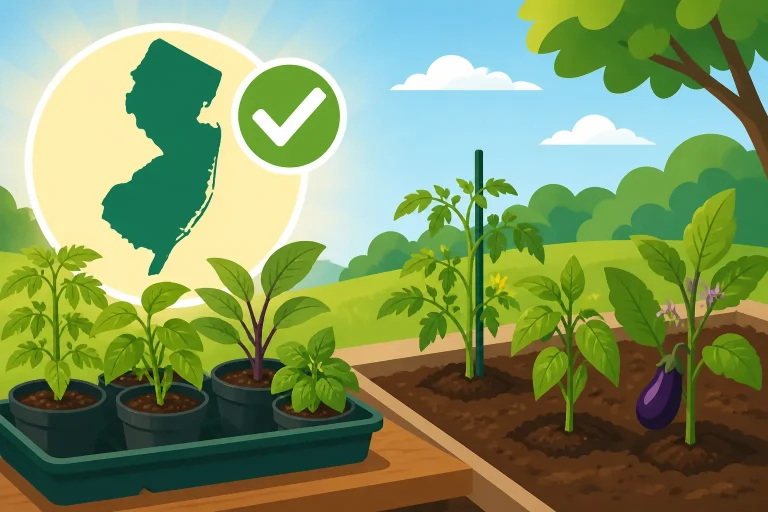
Tender crops can move outdoors in New Jersey when local frost risk is low, nights and soil are warm enough, and seedlings are hardened off.
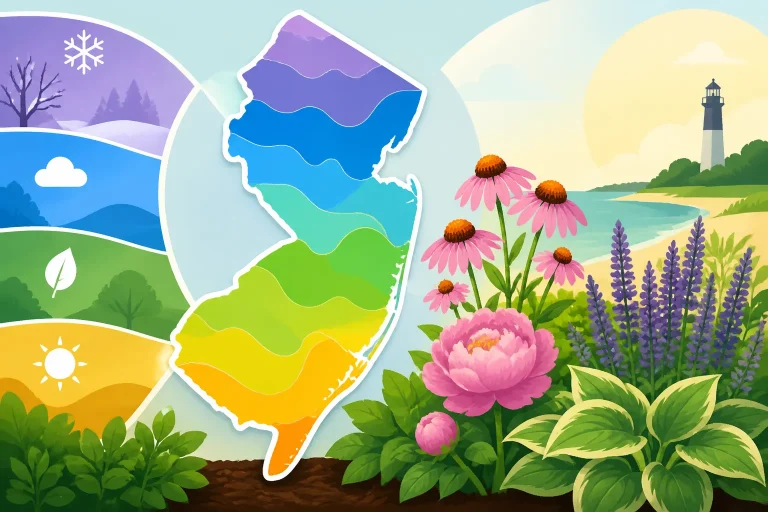
USDA hardiness zones help New Jersey gardeners screen perennials for winter cold, but site conditions like light, drainage, and exposure determine success.
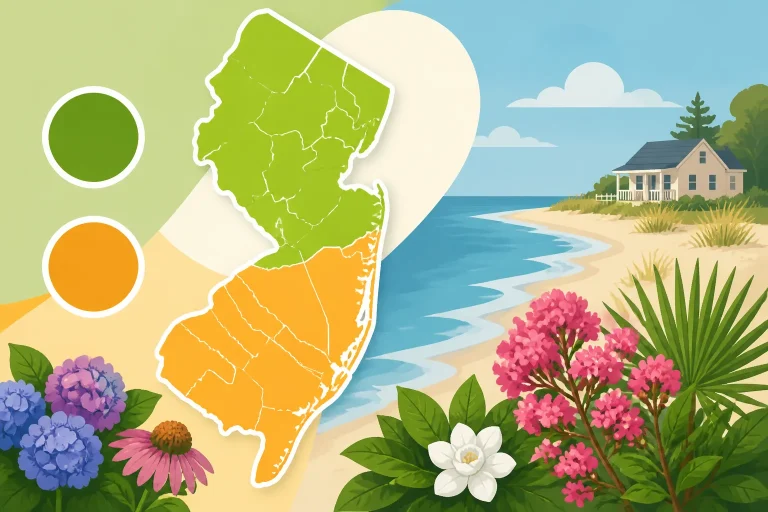
USDA Zones 7b and 8a overlap across South Jersey’s coastal transition; check your garden’s map location, then account for microclimates and frost risk.
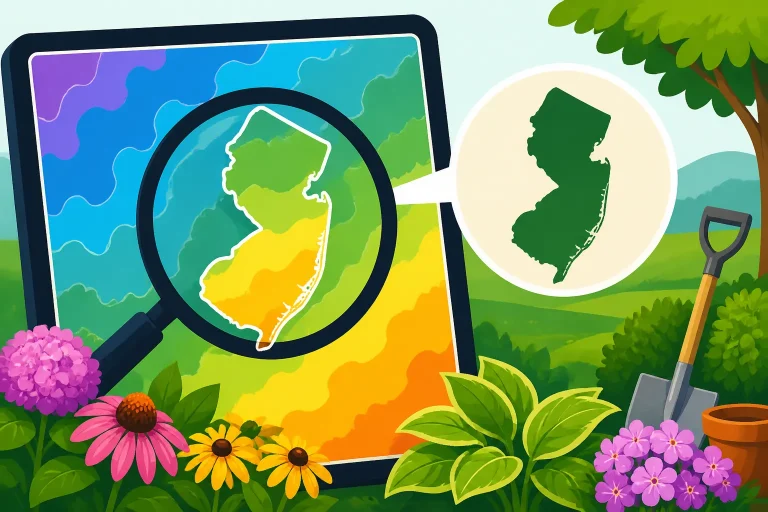
How to Find Your Exact USDA Zone on the Digital Map: check your property location, then account for local microclimates before choosing plants.