Starting Seeds Indoors vs Direct-Sowing in New Jersey
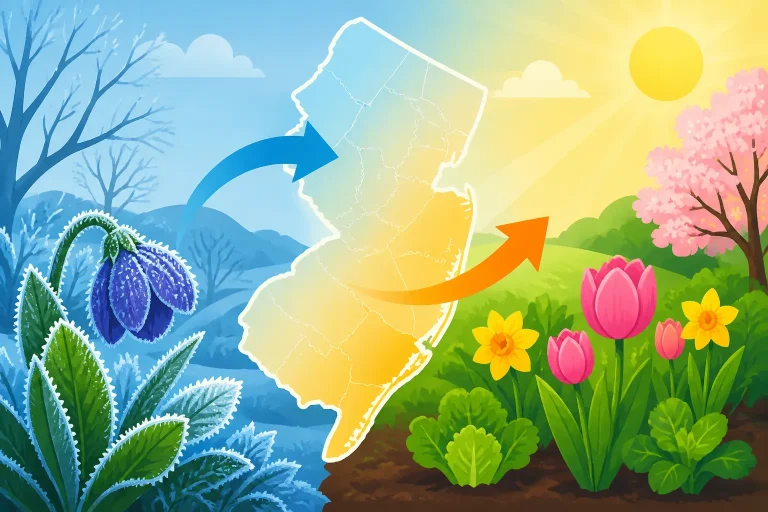
New Jersey’s planting calendar is not one fixed set of dates: frost risk, soil warmth, and yard conditions differ from one part of the state to another. Choosing whether to start seeds indoors or sow them directly can make the difference between sturdy plants and seedlings that stall. The best method depends on the crop, your local conditions, and how much time and space you can give it.
Start with the crop, not the calendar
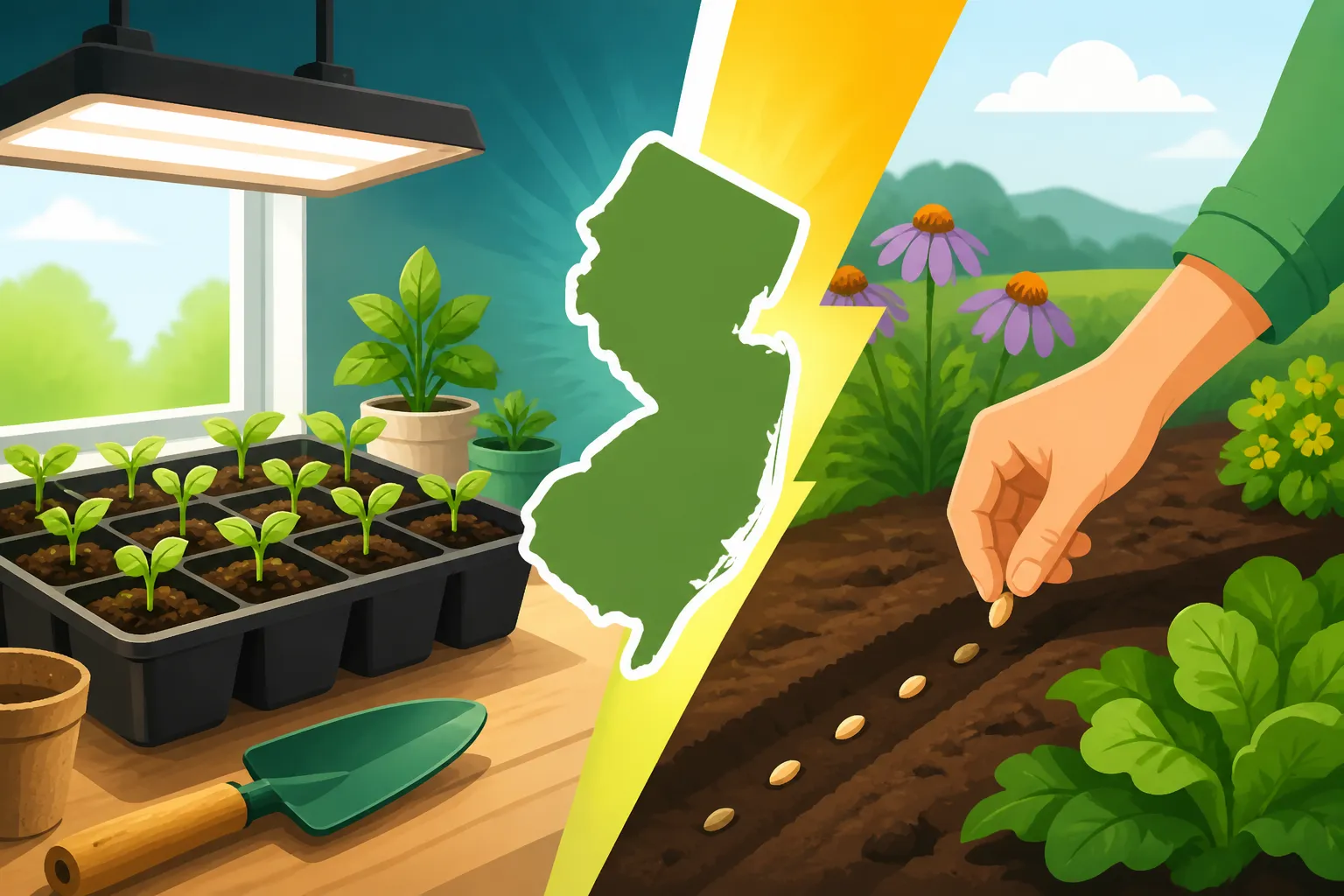
Indoor sowing and direct sowing solve different problems. Starting indoors gives certain crops a head start and lets you protect young plants while outdoor conditions are still unsettled. Direct sowing avoids transplant stress and gives crops with delicate roots room to grow where they will mature.
Neither method is automatically better. A crop that grows quickly in warm soil may be easier to sow outdoors, while a slow-growing crop that needs a long season may benefit from an indoor start. Some crops can work either way, depending on your space, timing, and tolerance for extra steps.
| Question | Indoor starting often makes sense when… | Direct sowing often makes sense when… |
|---|---|---|
| How long does the crop take to mature? | It grows slowly and needs time before outdoor conditions are suitable. | It matures quickly or has enough time to grow in the garden. |
| How does it handle root disturbance? | It tolerates transplanting and can be moved with its root ball intact. | It has a sensitive root system or does not transplant easily. |
| What does it need to germinate? | You can provide stable warmth and light indoors. | It germinates well in outdoor soil that is cool or warm enough for that crop. |
| How much room do you have? | You can provide bright light and enough space for growing seedlings. | Your indoor setup is limited, or the crop takes up a lot of room before planting. |
| How much work do you want? | You are comfortable watering, lighting, thinning, and hardening off seedlings. | You prefer to sow in the bed and thin the seedlings there. |
| What is the outdoor risk? | Seedlings need protection from cold or a short growing window. | The crop tolerates the outdoor conditions present at sowing time. |
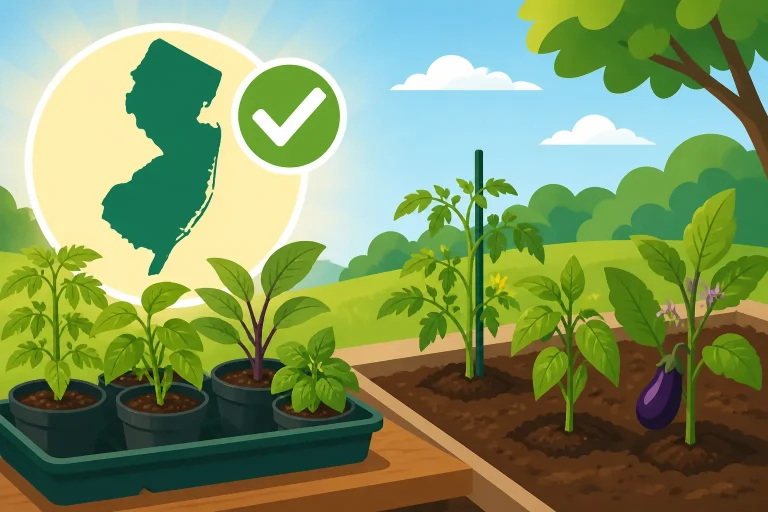
For a New Jersey garden, a useful starting distinction is between cool-season and warm-season crops. Cool-season crops such as peas, spinach, carrots, radishes, and lettuce can often be sown outdoors in suitable spring soil. Warm-season crops such as tomatoes, peppers, and eggplants are more vulnerable to cold and are usually started indoors or planted as nursery transplants after outdoor conditions are suitable.
Those categories are not a complete schedule. A cool-season crop may still struggle in saturated ground, and a warm-season transplant can be damaged by a cold night even after a stretch of mild weather. Use crop-specific instructions alongside your local freeze information. For a broader view of the state’s timing differences, see Month-by-Month Planting Windows Across New Jersey Regions.
Why timing varies across New Jersey
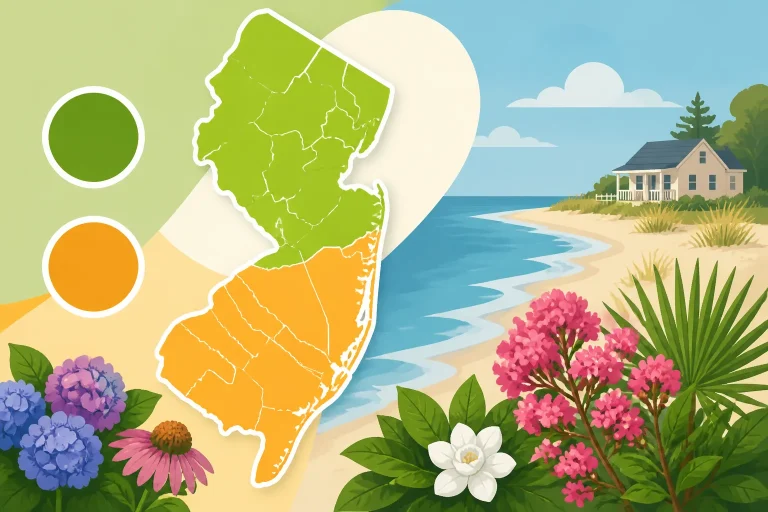
New Jersey gardens do not all warm up or lose frost risk at the same time. Northern and northwestern areas can experience colder conditions than many southern locations, while coastal influence can moderate temperatures near the shore. Elevation, distance from open water, pavement, slopes, and low-lying areas can all change conditions within a neighborhood.
That variation affects both methods. For indoor sowing, local conditions help determine when seedlings can safely move outdoors. For direct sowing, they help determine when soil and air conditions are suitable for a particular crop. A packet’s recommended planting window can be a helpful starting point, but it cannot account for every yard.
Use local frost information as a planning tool
Frost dates are probabilities, not promises. A typical last spring frost date does not mean frost cannot happen afterward, and a typical first autumn frost date does not predict the weather in a particular year. Use local freeze and frost information to understand the risk for your area, then adjust for your garden’s microclimate.
First and Last Frost Dates Across New Jersey Regions and Finding Your Exact Zone and Freeze Dates Using Your ZIP Code can help you narrow the calendar to your location. For context on why a statewide planting date can be misleading, read Why Last Spring Frost Shifts Six Weeks Across New Jersey.
A local weather station or freeze-normal reference is useful for planning, but it does not replace checking the forecast before moving tender plants outside. A forecast can alert you to an approaching cold night; historical probabilities help you understand the broader seasonal pattern. Both are useful, but neither guarantees frost-free conditions.
Read your yard as well as the forecast
A planting spot near a house, masonry wall, or paved area may hold warmth differently from an open garden. A low hollow can collect cold air, while a sheltered spot may experience less wind. Coastal air can influence nearby gardens, but sandy soil may warm and dry differently from heavier soil farther inland.
Observe where frost lingers, where snow melts first, and which areas stay wet after rain. These clues can guide planting choices, but they do not make a cold-sensitive crop frost-proof. A sheltered bed may support earlier planting than an exposed one, while a low spot may need more caution. For additional perspective on how yard conditions alter planting decisions, see Microclimates and Zone Discrepancies Across New Jersey Yards.
Which crops are better direct-sown
Direct sowing works especially well for crops that dislike being moved, germinate reliably in garden soil, or grow quickly enough without an indoor head start. It also avoids the equipment, space, and daily attention required for seedlings indoors.
Root crops and crops with sensitive roots
Carrots, radishes, and beets are common direct-sown crops. Their roots develop in place, so sowing them in the bed avoids the need to transplant young plants. Direct sowing is also a practical choice for turnips and parsnips, provided conditions suit the crop and the seedbed is prepared appropriately.
The main challenge is a consistent seedbed. Large clods, crusted soil, stones, and uneven moisture can interfere with germination or make roots grow irregularly. Prepare a fine, level surface, follow the packet’s depth instructions, and keep the seed zone from drying out while seeds germinate. Small seeds are easy to bury too deeply; use the seed packet rather than guessing.
Some root crops can be sown more than once during the season. For fall harvests, work backward from your intended harvest and the crop’s stated days to maturity, while allowing for the slower growth that can occur as autumn approaches. See Carrot Seeding Dates in New Jersey from Spring Through July for a crop-specific example.
Peas and other cool-season choices
Peas are usually planted directly in the garden rather than started indoors. They grow best in cool-season conditions, and sowing outdoors avoids handling seedlings that may be awkward to transplant. Spinach, lettuce, and other greens are also common direct-sown choices, though some can be started indoors if you want a particular spacing or transplanting approach.
Cool-season seeds do not all respond the same way to cold, wet soil. If the bed is saturated, working it can damage the soil structure, and seeds may rot or emerge unevenly. Wait until the soil is workable rather than treating a calendar date as a signal to dig. The article When Spring Soil Dries Enough to Till Without Forming Clods explains why soil condition matters before you prepare a bed.
For a closer look at which early crops are suited to outdoor sowing, see Which Early Spring Crops Belong Directly in the Ground. Not every early crop needs to be planted at the first opportunity. Sowing into suitable soil is more useful than sowing into soil that is too wet or otherwise unfavorable.
Beans, corn, squash, and other warm-season crops
Many gardeners direct-sow beans, corn, squash, cucumbers, and pumpkins after conditions are suitable for warm-season growth. These crops generally do not benefit from being planted outdoors while the soil is still cold. Their seeds may germinate slowly or unevenly if conditions are not warm enough.
Some warm-season crops can also be started indoors, but doing so may add work without a meaningful advantage. Cucurbits such as squash, cucumbers, and pumpkins can grow quickly, and their roots can be sensitive to disturbance. If you start them inside, use containers that allow you to move the root ball with minimal handling, and avoid keeping them indoors until they become crowded or overgrown.
Corn is a common direct-sown crop. It is generally planted in groups or blocks rather than a single long row, which supports pollination. Check crop-specific spacing and planting guidance before sowing; the packet and a local planting reference can help you set up the bed.
Direct sowing in spring and late summer
Direct sowing is not limited to spring. Many leafy greens, roots, and other cool-season crops can be sown later for autumn harvest. The challenge is that late-summer soil may be hot and dry, which can make germination difficult even when the crop itself prefers cool weather.
Keep the seed zone consistently moist while seeds are emerging, and use a spot that can be watered reliably. Choose crops with enough time to mature before hard frost, using the maturity information on the seed packet as a planning estimate rather than a guarantee. Autumn days become shorter and cooler, so plants may grow more slowly than they did earlier in the season.
For a wider range of late-season options, see Late-Season Sowing Guide: New Jersey Fall Vegetable Harvests. For timing considerations specific to greens and roots, Direct-Sowing Greens and Roots for Autumn Harvests in New Jersey may help you compare crops and planting windows.
Which crops often benefit from indoor starting
Indoor starting can be useful for crops that need a longer growing period than New Jersey’s outdoor conditions allow, or that are sensitive to cold when young. The goal is not simply to make seedlings as large as possible. It is to have healthy, appropriately sized plants ready to move outside when conditions support continued growth.
Tomatoes, peppers, and eggplants
Tomatoes, peppers, and eggplants are commonly started indoors because they are warm-season crops and cannot be planted outdoors while frost risk remains. Starting them inside gives them time to grow before the garden is ready for them. They still need suitable outdoor conditions after transplanting; an indoor start does not remove their need for warm soil and nights.
Avoid starting too early simply to get a head start. Seedlings kept inside for too long can become tall, crowded, root-bound, or weak if light is limited. If they are ready before the garden is, they may need potting up and continued care. A transplant that is sturdy and well-rooted is often more useful than one that is large but stressed.
For additional timing considerations, see Safely Transplanting Warm-Season Vegetables After Frost Risk Ends. The article Transplanting Tomatoes in May and June for High Summer Yields can also help with decisions about tomato planting windows.
Broccoli, cabbage, and other brassicas
Broccoli and cabbage may be started indoors or sown directly, depending on the season and your plan. Starting indoors can help you manage spacing and protect young plants, while direct sowing avoids transplanting and can be suitable when the bed and weather are appropriate.
A transplant may give you more control over when plants enter the bed, but seedlings need enough light and space to develop properly. Keep plants from becoming crowded, and move them outside gradually rather than taking them straight from a protected indoor environment into wind and full sun.
Brassicas are also useful for autumn harvests, but their summer starting window requires planning. You need to account for the time needed to grow a transplant and the time left in the season after it reaches the garden. For crop-specific guidance, see When to Start Broccoli and Cabbage in New Jersey and Starting Fall Brassicas: Summer Seeding Windows for Late Harvests.
Herbs and flowers
Some herbs and flowers are easy to start indoors, while others are simpler to sow outdoors. The best choice depends on the crop’s germination needs, how quickly it grows, and whether it tolerates root disturbance. Follow the packet instructions, especially where seeds need light, darkness, or a specific temperature range to germinate.
Starting a few herbs indoors can be convenient if you want young plants ready for containers or a garden bed. But it is not necessary for every herb. If you have limited light or shelf space, prioritize crops that genuinely benefit from an indoor start and sow the rest outdoors when conditions suit them.
When a nursery transplant is the practical choice
Starting seeds yourself takes space, light, supplies, and attention. Buying a healthy nursery transplant can be a sensible alternative when you need only a few plants or do not have a suitable indoor setup. Check that the plant is not badly wilted, leggy, crowded, or showing obvious damage, and choose one that is appropriate for the outdoor conditions you can provide.
A ready-grown plant does not eliminate the need to harden it off. Nursery plants may have been protected from wind, direct sun, or cool nights. Gradually introducing them to outdoor conditions helps reduce stress before planting. See How to Choose Healthy Vegetable Transplants at Local Nurseries and Hardening Off Tender Transplants Before New Jersey Spring Planting.
How to plan an indoor start without guessing
Indoor sowing involves working backward from the intended outdoor planting time. The packet’s recommended indoor-starting period, transplanting guidance, and days to maturity provide a starting framework. Then adjust for local frost risk, your garden conditions, and the amount of light and space available.
Whether seed comes from Botanical Interests or another supplier, use the instructions on that particular packet for seed depth, temperature, and spacing. Instructions can differ by crop and sometimes by variety. A general calendar is helpful, but it cannot replace details for the seed you are growing.
1. Choose a realistic outdoor planting window
First decide when the crop can reasonably go into the garden. For tender warm-season vegetables, that depends on more than the last average frost date: soil warmth and nighttime conditions matter too. For cool-season transplants, the suitable window may come earlier, but the seedlings still need to be ready and acclimated.
Use local frost information to frame the risk, not to promise a safe date. If your garden is in a colder pocket, near a low area, or exposed to wind, allow more caution. If it has a consistently sheltered microclimate, you may be able to adjust your plan, but keep checking the forecast.
2. Count backward using the seed packet
Once you have a reasonable outdoor planting window, use the packet’s indoor-starting guidance to estimate when to sow. Avoid relying on a single days-to-maturity number to calculate the entire growing plan: the number may refer to the time after transplanting or after direct sowing, depending on the crop and packet.
If you are unsure what the number means, read the packet details carefully or check a crop-specific reference. Keep a small calendar or notebook that records when you sowed, when seedlings emerged, and when you transplanted. That record can help you adjust future sowings without assuming that one season’s conditions will repeat exactly.
3. Set up light, containers, and labels
Seedlings need enough light to grow sturdy. A bright window may work for some plants, but indoor light can be weaker than it appears, especially in a room where seedlings receive only a short period of direct sun. If seedlings stretch toward the light, lean, or develop long weak stems, the setup may not be providing enough.
Use clean containers with drainage and a seed-starting medium suited to germination. Label each container with the crop and sowing date. This prevents mix-ups when several crops look alike as seedlings and helps you track how quickly each batch emerges.
Keep moisture even, not waterlogged. Seeds and young roots need water, but saturated medium can limit air around the roots and encourage problems. Follow crop-specific instructions for depth and temperature, and check containers regularly rather than watering by a rigid schedule.
4. Avoid overcrowding and premature transplanting
Sow only as many seedlings as you can care for and eventually plant. Crowded seedlings compete for light and air, and separating them later may damage roots. If the packet advises thinning or sowing a certain number per container, follow that direction.
Do not assume that a seedling is ready for the garden just because it has reached a particular height. Look for sturdy growth and a root system that holds the growing medium together without being severely tangled. A plant that has outgrown its container may need more space before planting, while a tiny seedling may need more time.
5. Harden off before planting
Indoor-grown seedlings need a gradual transition to outdoor light, wind, and temperature changes. The process is called hardening off. It is not the same as setting pots outside once and leaving them there.
Begin with sheltered outdoor exposure and increase exposure gradually, while protecting plants from conditions they have not yet experienced. Bring them back under cover if conditions become too harsh. The length and pace of the process depend on the weather and the seedlings’ condition. Follow Hardening Off Tender Transplants Before New Jersey Spring Planting for more detail.
How to direct-sow successfully
Direct sowing removes the indoor seedling stage, but it does not remove the need for preparation. Seeds need suitable soil, planting depth, moisture, and space. Small differences in how the bed is prepared can affect emergence, especially for small-seeded crops.
Prepare the bed when the soil is workable
Avoid digging or tilling soil when it is wet enough to clump and smear. Working saturated soil can leave it compacted and difficult for roots to penetrate. Wait until it crumbles rather than forming dense clods, then remove large stones and break up heavy lumps in the area where you plan to sow.
You usually do not need to make every bed perfectly fine. The surface should be suitable for the crop: small seeds benefit from a smoother seedbed, while larger seeds can be placed in a less finely prepared surface. Follow the seed packet for planting depth and spacing rather than using the same depth for every crop.
Sow at the right depth and spacing
A common cause of poor emergence is sowing too deep. Small seeds may have limited reserves and can struggle to reach the surface if buried too far. Large seeds are generally planted deeper, but the correct depth is crop-specific. Use the packet’s directions.
Seed spacing can be tricky because some seeds may not germinate. Many gardeners sow a little more densely and thin seedlings after emergence, but overcrowding left uncorrected can reduce airflow and produce smaller plants. Thinning also gives roots room to develop. If you are growing crops with precise spacing needs, plan the rows before sowing rather than relying on memory.
Keep the seed zone moist
Seeds can fail to germinate if the soil surface dries out during the period when they are taking up water. At the same time, consistently saturated soil is not a good substitute for steady moisture. Use gentle watering that does not wash seeds out of their rows, and check the bed more often in windy or hot weather.
During late-summer sowing, the soil surface may dry quickly. A light, suitable cover can help retain moisture, but it should not prevent seedlings from reaching light or make it difficult to see emerging rows. Check daily during the expected emergence period, especially for small-seeded crops.
Mark rows and protect them from disturbance
Newly sown rows can be hard to see, and a seedling may look like a weed before it develops recognizable leaves. Mark rows with labels or simple stakes so you know where to look. This makes it easier to water, thin, and remove competing weeds without disturbing the crop.
Birds, animals, heavy rain, and foot traffic can also disturb freshly sown beds. Where needed, use an appropriate temporary barrier that does not press on emerging seedlings. Remove or adjust it as plants grow so it does not interfere with their development.
Common mistakes and how to adjust
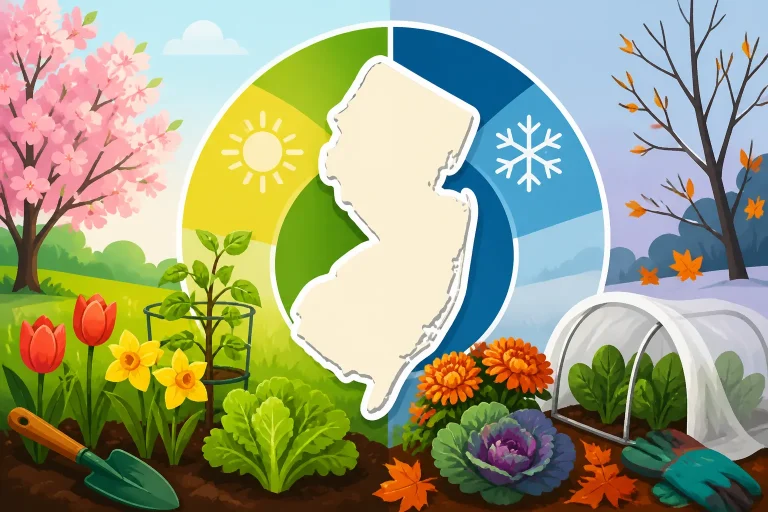
The most useful planting plan is one you can adapt. New Jersey weather can shift from mild to cold, and garden conditions can vary from one bed to another. Rather than treating a planting calendar as a fixed command, use it to make a decision and then respond to what the soil and weather are doing.
Starting everything indoors
Indoor starting can seem like a way to get ahead, but it is not a shortcut for every crop. It requires bright light, room for seedlings, regular care, and a gradual transition outdoors. Crops with sensitive roots or a short time to maturity may do just as well when sown directly.
If your indoor space is limited, start the crops that need the extra time and direct-sow the rest when conditions suit them. This reduces crowding and makes it easier to maintain healthy transplants.
Starting warm crops too early
An early sowing can produce seedlings that are large before the garden is ready. If the plants become root-bound or stretched indoors, they may take longer to establish after planting. Plan backward from a realistic outdoor window and use the packet’s guidance for indoor sowing.
If an unexpected cold period delays planting, protect seedlings and give them enough space and light. Avoid trying to compensate with excessive feeding or by moving them outdoors before conditions are suitable. For signs that seedlings should remain protected, see Signs It Is Still Too Early to Set Out Tender Seedlings.
Direct-sowing into cold, wet, or crusted soil
A calendar may suggest a planting window, but the bed still has to be ready. Cold, wet soil can delay germination, and a crusted surface can block emerging seedlings. If the soil is too wet to work, wait. If the surface dries hard after watering or rain, consider how to prepare and maintain the seedbed for that crop before sowing.
Ignoring autumn timing
Fall crops need enough time to grow before conditions slow or frost ends the harvest. Counting backward from a likely harvest period can help, but days to maturity are estimates, and growth rates change with temperature and daylight. Choose a crop and sowing window suited to the remaining season, then keep the seedbed moist during hot weather.
New Jersey’s autumn conditions also differ by region and yard. Coastal moderation may extend opportunities in some locations, while inland or elevated gardens can experience colder conditions sooner. For more background, see New Jersey Freeze Timelines for Spring and Autumn Gardeners.
Treating a warm spell as a guarantee
A run of mild days can tempt gardeners to plant tender crops early. But a warm spell does not remove the possibility of a cold night, and soil can remain cool after the air warms. Check the forecast and consider the crop’s temperature needs before moving seedlings outside or sowing warm-season seeds.
Keeping a simple planting record
A short record can make next season’s planning more accurate. Note the crop, variety, sowing date, method, emergence, transplanting date, and any cold or heat problems. Also record whether the bed was unusually wet, shaded, exposed, or sheltered.
These notes are more useful than trying to remember a single “right” date. They show which method worked for your garden and where you might change the next sowing. Over time, you can develop a practical calendar for your own yard while still checking current conditions each season.
Frequently Asked Questions
Is it better to start vegetable seeds indoors or sow them directly?
It depends on the crop. Slow-growing, cold-sensitive crops often benefit from an indoor start, while root crops and many quick-growing vegetables are usually easier to sow in the garden. Some crops can be grown either way.
Can I plant warm-season vegetables as soon as frost is unlikely?
Not necessarily. Frost risk is important, but warm-season crops also need suitable soil and nighttime conditions. Check the forecast, consider your garden’s microclimate, and follow crop-specific planting guidance.
Do coastal New Jersey gardens always plant earlier?
No. Coastal influence can moderate temperatures in some locations, but conditions still vary by site, soil, wind exposure, and year. Use local frost information and observe the actual garden rather than assuming every shore location is ready first.
Can seedlings be moved straight from indoors into full sun?
It is better to harden them off gradually. Indoor seedlings may not be acclimated to direct sun, wind, or outdoor temperature swings. Increase their exposure over time and protect them if conditions become harsh.
Disclaimer
This article is for general informational purposes only and does not constitute professional advice. Laws, prices and regulations vary by location and change over time. Consult a qualified professional for guidance on your specific situation. New Jersey Gardening Guide is not a government agency and is not affiliated with any university extension, state department of agriculture or other government agency.