New Jersey Freeze Timelines for Spring and Autumn Gardeners
New Jersey gardeners have to make planting decisions across a state where freeze risk varies by location—and a calendar date can never guarantee what the weather will do. This guide explains how to read spring and autumn freeze timelines, use them alongside crop needs, and adjust for the conditions in your own yard.
What freeze dates tell you—and what they cannot
A freeze timeline is a planning aid, not a promise. It describes the likelihood of a temperature event around a weather station or across a region. It cannot tell you exactly what will happen in your garden on a particular night.
That distinction matters because gardeners often use “frost date” and “freeze date” as if they mean the same thing. A freeze timeline refers to temperatures reaching the freezing point. Frost can form on plant surfaces under conditions that do not match the temperature recorded at a weather station. And a station’s air temperature is not necessarily the temperature around leaves in a sheltered bed, a low spot, or a pot on an exposed deck.
A freeze date is also not an automatic planting date. It helps answer a narrower question: when does the chance of a freeze become lower, or begin to rise, in a particular place? Whether it is sensible to plant depends on the crop, the forecast, soil and air conditions, and whether you can protect plants if cold returns.
The probability attached to a date is important. A date at a 50% probability is not a guarantee that a freeze will happen on that date, nor that the risk has disappeared afterward. It is a statistical reference point. A gardener who needs a conservative plan should not treat a median date as a safety line.
| Timeline information | Useful for | Not enough to decide |
|---|---|---|
| A station’s spring freeze normal | Comparing seasonal risk and planning around a local reference | Whether a tender crop is safe to plant on a particular day |
| A station’s autumn freeze normal | Planning harvests and preparing crops for cold weather | Whether a specific yard will freeze that night |
| Regional planting guidance | Setting a broad starting window for crop groups | Choosing an exact day for every town or garden bed |
| A forecast for your location | Making near-term decisions about protection or planting | Replacing longer-term seasonal planning |
Think of the timeline as one layer in a decision. It works best with a local forecast, the crop’s cold tolerance, and a close look at the planting site. For a broader view of regional patterns, see First and Last Frost Dates Across New Jersey Regions. For the difference between a seasonal timeline and day-to-day weather, How to Look Up Local Freeze Probabilities Across New Jersey can help you organize the information you need.
Reading the New Jersey spring freeze timeline
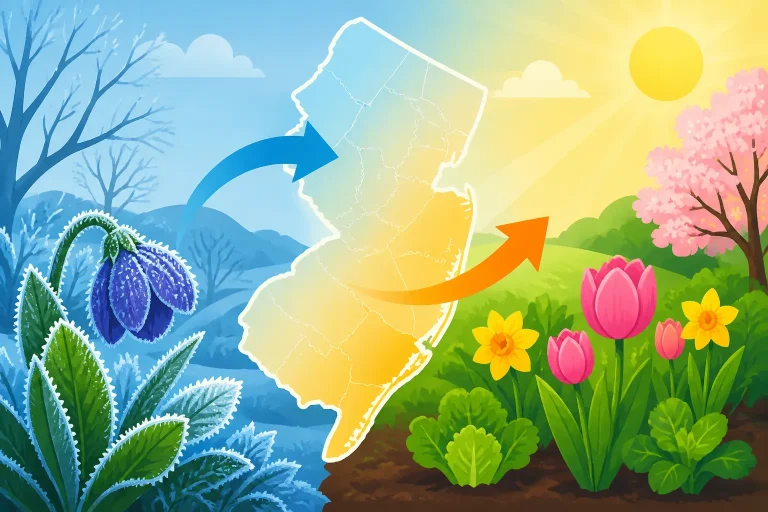
New Jersey’s spring planting calendar cannot be reduced to one statewide date. The conditions relevant to a garden in the southern part of the state may not match those in a colder inland location farther north and west. A regional timeline gives you a starting point, but it does not replace a forecast for your own area.
At the Newark International Airport weather station in New Jersey, NOAA National Centers for Environmental Information lists the 1991–2020 normal last spring freeze (32°F) at 50% probability as 04/02 (April 2). That is a station-specific probability reference, not a statewide planting signal. It does not mean every yard near Newark stops experiencing freeze risk at that point, and it should not be applied to other parts of New Jersey as though they share the same local conditions.
The spring timeline is most useful when you ask what kind of decision you are making. Are you planning to sow a crop that tolerates cool weather? Are you preparing to set out a tender transplant? Are you deciding whether to uncover a plant or leave protection in place? Those questions have different answers even when they concern the same part of the calendar.
Regional differences can make a single date misleading. Why Last Spring Frost Shifts Six Weeks Across New Jersey explains why gardeners should expect the spring risk period to vary across the state. The key practical point is not to memorize one date. It is to match the weather reference to the location and crop.
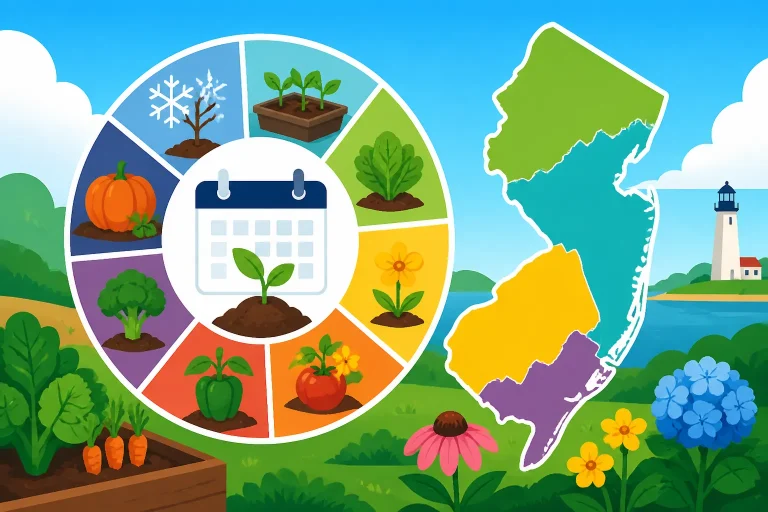
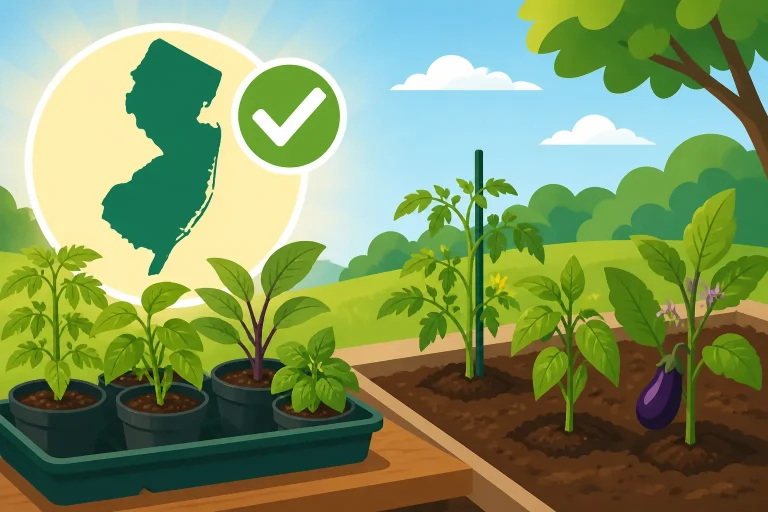
Rutgers Cooperative Extension says warm-season vegetables should wait until frost danger has passed—April 20 in extreme southern New Jersey to June 1 in the colder northwest—while cool-season crops can usually be planted in mid-to-late April. Rutgers Cooperative Extension does not give separate dates for inland versus coastal areas in that guidance. Treat this as broad crop-group guidance rather than a custom schedule for every neighborhood.
For a more detailed seasonal view, Month-by-Month Planting Windows Across New Jersey Regions can help you connect broad timing with successive planting decisions. If you are comparing crops that can tolerate cooler conditions with those that need warmer weather, Planning Warm vs Cool Season Crops Around Late Spring Freezes is a useful companion.
A spring timeline should prompt preparation, not a rush to plant. Have the bed ready, but keep tender seedlings protected until the conditions suit them. If the forecast shifts, the ability to wait or cover plants is often more useful than trying to hit a single date.
Match spring planting to crop tolerance
The most dependable way to use a freeze timeline is to sort crops by how they respond to cold. A cool-season crop may be suitable for planting while freeze risk remains, while a warm-season crop can be damaged by cold that a hardier crop might tolerate. The calendar matters, but the crop’s needs matter more.
Cool-season vegetables are the group to consider first when spring soil and weather begin to become workable. They can often be planted before the point when frost danger has passed for tender crops. That does not mean every cool-season plant is immune to cold injury. Newly emerged seedlings and young transplants can be more vulnerable than established plants, and a sudden cold snap can still slow growth or damage foliage.
Warm-season vegetables need a more cautious approach. They may struggle in cold soil or be injured by a late freeze even when the season feels well underway. Instead of relying on a familiar holiday or a date remembered from a previous year, check the local forecast and use the regional planting guidance as a broad boundary. Is Mother’s Day Late Enough to Plant Warm Crops in New Jersey? addresses why a calendar holiday alone does not resolve the risk.
It also helps to separate three stages that are often treated as one:
- Sowing seeds: Seeds placed directly in the ground face the soil conditions where they are planted. Cold, wet ground can delay germination or prevent a crop from getting started well.
- Moving seedlings outdoors: A transplant may have been growing under protected conditions and need time to adjust to outdoor light, wind, and temperature changes. Hardening off can reduce the shock of that transition; Hardening Off Tender Transplants Before New Jersey Spring Planting explains the process.
- Leaving plants unprotected: A plant that survives a mild cold night may still be exposed to a colder one later. Planting and removing all protection are separate decisions.
Make a flexible plan rather than a single planting-day list. Identify which crops can go in while cool conditions remain, which ones should wait for more warmth, and which seedlings can stay sheltered if the forecast turns unfavorable. Starting Seeds Indoors vs Direct-Sowing in New Jersey can help you choose between starting a crop under cover and sowing it in the bed.
The condition of the garden bed matters, too. Soil that is workable and suitable for the crop is a better signal than a date alone. If a bed is waterlogged, cold, or difficult to work without damaging its structure, forcing planting to match a calendar can create problems that have nothing to do with the freeze date. A practical schedule gives the soil time to become suitable and leaves room to adjust.
When a cold night is forecast after planting, focus on the most vulnerable plants first. Newly transplanted, warm-season crops deserve more attention than established plants that are suited to cool weather. For practical options, see When to Cover Tender Garden Vegetables Before Frosty Nights and Using Cold Frames and Low Tunnels to Guard Early Spring Starts. Any cover should be managed according to the conditions and the needs of the plants beneath it.
Using the autumn freeze timeline
Autumn planning is the reverse of spring planning, but the same caution applies: a normal date is not a deadline. It can help you estimate when cold risk becomes more relevant, but it cannot tell you exactly when your garden will experience a freeze.
At the Newark International Airport weather station in New Jersey, NOAA National Centers for Environmental Information lists the 1991–2020 normal first fall freeze (32°F) at 50% probability as 11/10 (November 10). This is a reference for that station and probability, not a promise that every New Jersey garden will remain frost-free until then. A yard can experience cold conditions before or after the station’s normal, depending on local weather and site conditions.
Use the autumn timeline to work backward from what you want to harvest. A crop that needs more time to mature may need to be sown earlier than a fast-growing crop. A plant that is cold-sensitive may need protection or an earlier harvest plan. A crop that tolerates cool weather may continue to be useful as nights grow colder. The calendar is only helpful if you compare it with the crop’s maturity needs and the time remaining in your own growing conditions.
For late-season vegetables, avoid assuming that a mild spell means the risk has passed. A stretch of warm afternoons can make the garden feel as though summer has returned, but it does not guarantee warm nights ahead. Keep an eye on the forecast and decide in advance which crops you would harvest, cover, or leave in place if cold weather approaches.
A useful autumn checklist includes:
- Check the crop’s expected time to maturity and compare it with your remaining growing window.
- Harvest mature produce before a forecast cold event if leaving it outside risks damage.
- Keep covers and other protective materials ready for crops that may benefit from temporary shelter.
- Avoid sowing a crop simply because the bed is empty; consider whether it has enough suitable growing time.
- Review the forecast again as conditions change rather than relying only on the seasonal normal.
The autumn date can also help you plan for flowers, herbs, and other garden plants, but their needs vary. Some plants may tolerate cooler weather, while tender growth can be damaged by cold. For vegetable timing, Late-Season Sowing Guide: New Jersey Fall Vegetable Harvests and How to Count Days to Maturity for Autumn Harvest in New Jersey offer more focused planning help.
If the forecast calls for cold, protection may extend the useful season for some plants, but it cannot turn every crop into a cold-hardy one. Consider the value of the harvest, the plant’s condition, and the effort needed to protect it. Sometimes harvesting early is the more reliable choice.
Why your yard may differ from a weather station
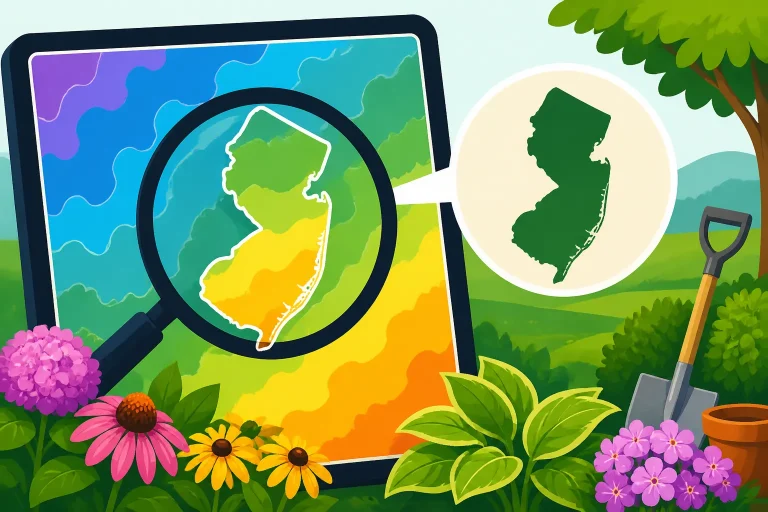
A weather station gives you a consistent reference point. Your garden is a different environment. It may be warmer or colder than the station at a particular time, and conditions can vary even within one property.
The location of a bed can affect how exposed it is. A low area may collect colder air, while a site next to a building or paved surface may behave differently from an open area. A sheltered corner can have less exposure to wind, while an unprotected bed may be more exposed. These are reasons to observe your own garden over time; they are not a substitute for an official forecast or a way to calculate an exact freeze date.
Planting containers add another consideration. A pot is exposed on more sides than soil in a garden bed, and the plant may be easier to move or cover. That flexibility can be useful during a cold spell, but it does not guarantee safety. Container plants still need to be matched to suitable weather, and a move to shelter should be planned before the cold arrives.
Do not confuse a hardiness zone with a freeze timeline. A hardiness zone describes the typical winter cold a perennial must tolerate; a spring or autumn freeze timeline addresses the likelihood of a temperature event during a particular part of the growing season. A zone cannot tell you when to plant a vegetable this spring, and a freeze normal does not determine whether a perennial is winter-hardy. USDA Hardiness Zones: What They Mean for Perennials covers the different role of zone information.
Location-specific timelines can be useful where they are available, but a station should not be treated as the exact conditions at every nearby address. When a source gives a station’s probability, use it as the station’s reference. Then consider local terrain and exposure, check the forecast, and leave a margin for uncertainty.
This is especially important when comparing inland and coastal gardening. Rutgers Cooperative Extension’s broad warm-season guidance does not provide separate inland and coastal planting dates. Do not turn that absence into a precise local date by guessing. Use the regional range as context, then seek local weather information and observe how your particular site behaves. The article Microclimates and Zone Discrepancies Across New Jersey Yards offers more detail on why nearby planting sites can differ.
A short garden record can help you make better decisions in later seasons. Note when cold affected a bed, which plants were covered, and how the site differed from a more exposed area. Avoid treating one season as a fixed rule; a record is most useful as local experience to compare with future forecasts, not as a replacement for them.
Build a flexible planting and harvest plan
A useful calendar has room for adjustment. Rather than writing one date beside every crop, create a plan that links crop type, planting method, location, and a response to changing weather.
Start by choosing the weather reference that fits the decision. A station normal can help you understand seasonal patterns. Regional planting guidance can suggest a broad window for a crop group. A current forecast is more useful for deciding whether to plant or protect plants in the near term. These sources answer different questions, so one should not be treated as a substitute for the others.
Then sort crops by their tolerance and how they are being started. A direct-sown crop faces the conditions in the garden bed from the beginning. A seedling started under protection is more developed but may need a gradual transition outdoors. A tender warm-season crop may need to wait, even if a hardier crop is already growing. Keeping these categories separate prevents a common planning mistake: assuming that all vegetables belong on the same planting schedule.
Before planting, check the bed and the forecast. If soil conditions are not suitable, waiting can be wiser than forcing a schedule. If a cold night is in the forecast, decide whether to delay planting, cover the crop, move a container, or harvest what is ready. Make that choice before the evening arrives, while there is time to prepare.
A simple planning worksheet can include:
- Crop: Name the vegetable or other plant.
- Method: Note whether it will be direct-sown, transplanted, or kept in a container.
- Cold sensitivity: Record whether it is suited to cool weather or needs warmer conditions.
- Site: Identify whether the planting area is exposed, sheltered, low, or easy to cover.
- Decision point: Write down what forecast or soil condition would lead you to plant, wait, cover, or harvest.
- Backup plan: Decide what you will do if the weather changes after planting.
Keep the worksheet flexible. A date written in advance should be a reminder to reassess, not an instruction to plant regardless of conditions. If a warm period arrives early, it may tempt you to move tender crops outside; if cold returns, a plan to wait or protect them reduces the pressure to make a rushed decision. If the season stays cool, you can prioritize crops suited to those conditions while delaying the tender ones.
For a broader seasonal overview, Planning Your New Jersey Vegetable Garden From Site to Harvest can help connect planting choices with the rest of the garden plan. Combine that calendar with local forecasts, and revise it when the weather or the garden itself gives you a reason to do so.
Common mistakes when using freeze timelines
The first mistake is treating a normal as a guarantee. A probability date summarizes a pattern; it does not promise a freeze on a particular day or guarantee safe conditions after it. Keep the probability in view and check the forecast before making a decision that could put vulnerable plants at risk.
Another mistake is using a station date as though it applied uniformly across New Jersey. A station record is tied to its location. Regional differences and site conditions matter, so a station near one community should not be presented as the exact freeze schedule for every county or yard.
A third mistake is assuming every crop responds to cold in the same way. Planting a hardy crop and planting a tender transplant are not equivalent decisions. If you use a single calendar date for both, you may either delay crops that can grow in cool conditions or expose sensitive plants too early.
Gardeners can also mistake a warm afternoon for evidence that the risk has ended. Daytime comfort does not settle what conditions will be overnight. Check the forecast for the garden’s location, especially when plants are newly transplanted or otherwise vulnerable.
Finally, avoid treating protection as a guarantee. Covers and structures can be useful tools, but their effectiveness depends on the weather, the setup, and the plants being protected. Check the guidance for the protection method you are using, and do not assume that an uncovered or poorly managed plant will be safe simply because some covering is present.
A better approach is to combine the timeline with crop tolerance, forecast information, and observation. If those signals conflict, pause and decide which risk matters most: planting too early, delaying a crop, or leaving plants exposed. A flexible garden plan makes it easier to choose without relying on a single date.
Frequently Asked Questions
Is a 50% freeze date a safe planting date?
No. It is a probability reference, not a guarantee that cold will not occur afterward. Use it with crop tolerance and a current local forecast.
Should all vegetables wait until the last spring freeze?
No. Cool-season crops and tender warm-season crops have different needs. Follow crop-specific guidance rather than applying one date to every vegetable.
Can my garden freeze when a nearby station does not?
Yes. A station records conditions at its location, while garden sites can differ in exposure and local terrain. Check the forecast and consider the conditions around your own beds.
Does a hardiness zone tell me when to plant vegetables?
No. A hardiness zone helps assess winter cold suitability for perennial plants. Planting vegetables requires attention to seasonal freeze risk, crop tolerance, and current conditions.
Sources
- Rutgers Cooperative Extension — Starting Vegetable Seeds Indoors (checked November 15, 2026)
- NOAA National Centers for Environmental Information — NOAA NCEI 1991–2020 Climate Normals — Newark International Airport, New Jersey (checked November 14, 2026)
Disclaimer
This article is for general informational purposes only and does not constitute professional advice. Laws, prices and regulations vary by location and change over time. Consult a qualified professional for guidance on your specific situation. New Jersey Gardening Guide is not a government agency and is not affiliated with any university extension, state department of agriculture or other government agency.