Microclimates and Zone Discrepancies Across New Jersey Yards
A plant that thrives in one New Jersey yard may struggle a few streets away, even when both sites fall in the same hardiness zone. The zone map is useful, but it cannot describe every sheltered corner, wind tunnel, wet hollow, or sun-warmed wall. Understanding those local differences helps you choose plants more confidently and make planting decisions that fit your actual site.
Why two New Jersey yards can have different growing conditions
A hardiness zone is a broad way to describe a region’s winter cold, not a complete forecast for an individual garden. The USDA Plant Hardiness Zone Map helps gardeners compare plants’ ability to withstand winter cold, but it does not capture every factor that influences how a plant fares in a particular yard.
According to the USDA Agricultural Research Service, factors beyond hardiness zone include: Wind, soil type, soil moisture, humidity, pollution, snow, and winter sunshine. These conditions vary within towns and even within one property. A sunny, sheltered bed against a building can behave differently from an open bed nearby, despite sharing the same mapped zone.
New Jersey’s varied landscapes make that distinction especially useful. A yard’s exposure, drainage, nearby buildings, tree cover, and position on a slope can all shape its growing conditions. A broad regional zone gives you a starting point; observation helps you decide whether a specific planting spot is warmer, colder, wetter, drier, or more exposed than the map suggests.
This is why zone information and planting calendars answer different questions. A hardiness zone can help you assess whether a perennial or shrub is likely to withstand winter cold in your area. It does not tell you when the last spring frost will occur at your address, whether a tender vegetable can go outside, or whether a low spot will collect cold air on a clear night. For those decisions, local weather patterns and site conditions matter too.
Urban settings can create another source of apparent mismatch. According to the USDA Agricultural Research Service, a city or town might be assigned to a zone warmer than the surrounding countryside. That regional difference does not mean every city garden is warm and sheltered. An exposed rooftop, shaded courtyard, or wind-swept lot may still have conditions that challenge plants.
Elevation also matters. According to the USDA Agricultural Research Service, the top of a mountain might be an area of cooler zones. More locally, a slope and a hollow can differ in exposure and cold-air behavior even within the same landscape. These variations help explain why a plant can thrive in one part of a neighborhood and struggle in another.
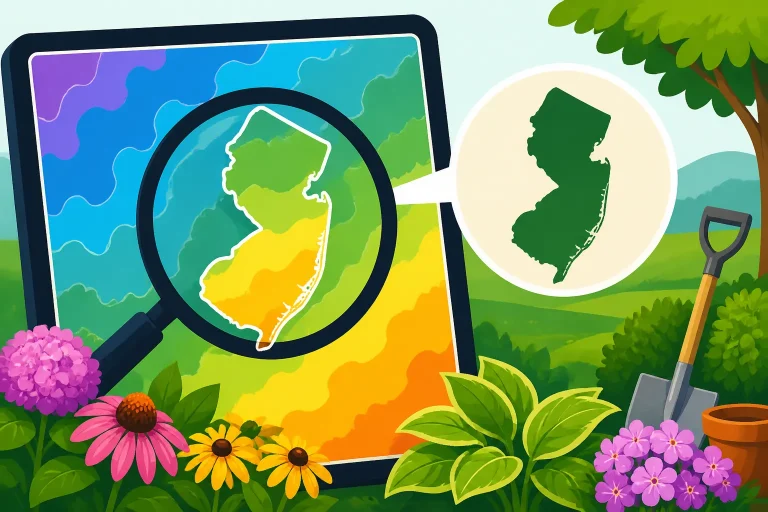
If the zone shown for your location seems inconsistent with what you observe, treat that as a prompt to investigate rather than proof that the map is wrong. The mapped zone describes a broad pattern. Your yard’s small-scale conditions add another layer. For a closer look at the map itself, see Using the USDA Plant Hardiness Zone Map for Garden Plants and How to Find Your Exact USDA Zone on the Digital Map.
What creates a microclimate in a yard
A microclimate is a small area with conditions that differ from the wider area around it. In a home garden, the differences may be subtle or pronounced. You do not need special equipment to begin noticing them: the position of the sun, the direction of prevailing exposure, surface materials, slope, and water movement all offer clues.
Sun, shade, and nearby structures
A wall, fence, paved surface, or building can change how much sun a planting area receives and how much warmth it holds. A south-facing wall may receive strong sun and shelter plants from some winds, while a shaded side of the same building can stay cooler and damp for longer. Pavement and masonry may also retain warmth after sunny periods, but the effect depends on the site and its exposure.
That added warmth is not automatically an advantage. A sheltered, sunny bed may suit a plant that needs warmth, yet it can also dry out more quickly or expose plants to reflected heat. A shaded corner may reduce heat stress but receive too little light for a plant that needs full sun. Observe the spot through the seasons before treating it as a reliably warm or cool location.
Tree cover changes conditions in more than one way. A canopy can reduce direct sun and wind, and its roots may compete with nearby plants for water. At the same time, an open area next to the trees can receive more sun and wind than the garden bed under them. Consider both the overhead cover and what is happening below ground when choosing a planting site.
Wind and shelter
Wind can dry foliage and soil, increase stress, and make a cold site feel harsher. An open yard, a passage between buildings, or an exposed rise may be more vulnerable than a spot behind a substantial barrier. A fence, hedge, or building can reduce exposure, but the amount of shelter varies with the layout and direction of the wind.
Shelter has trade-offs. A dense barrier can limit air movement, while an enclosed corner may stay damp or warm. The aim is not to make every bed completely sheltered; it is to match plants to the conditions you actually have. Before adding a windbreak, note where wind enters the yard and whether the proposed barrier would create shade or crowd nearby planting.
Slope, low spots, and drainage
A slope may drain differently from a level bed, and water can collect in a depression or low area. Cold air can also settle in low places under some conditions, making them more prone to frost than nearby higher ground. That is one reason a garden’s location within the yard can matter as much as the regional forecast. See Why Low Spots in a New Jersey Yard Frost First for more on this pattern.
Do not assume that every low spot is always colder or that every raised location is protected. The result depends on the shape of the land, nearby obstacles, wind, and weather. Instead, note where frost remains longest, where water stands after rain, and which beds dry first. Those repeated observations give you a more useful picture than a single cold morning.
Soil conditions add another layer. A site that stays wet can challenge plants that need well-drained soil, while a dry area may stress plants that prefer consistently moist conditions. Hardiness zone does not describe those differences. When plants struggle despite appearing winter-hardy for your zone, investigate drainage and soil moisture as well as cold exposure.
| Yard feature | Possible site effect | What to observe |
|---|---|---|
| South-facing wall or paved area | More sun or retained warmth, with possible drying or reflected heat | Sun exposure, soil moisture, and whether nearby plants show heat stress |
| Shaded side of a building or tree canopy | Less direct sun and potentially slower drying | How much light reaches the bed and how long leaves or soil stay damp |
| Open rise or exposed yard | Greater wind exposure and faster drying | Wind direction, foliage damage, and how quickly the soil loses moisture |
| Hollow or low spot | Water may collect, and cold air may settle under some conditions | Where frost lingers and where water remains after rain |
| Sheltered corner | Reduced exposure, but sometimes limited airflow | Whether the spot stays damp or receives enough sun |
| Slope | Water may move downhill rather than soaking evenly | Which sections dry quickly and where runoff flows |
Use this table as a set of questions, not as a guarantee about what a feature will do. Two yards with similar slopes or buildings can still differ because of their orientation, soil, surrounding vegetation, and exposure.
How to assess your yard before choosing plants
A short period of careful observation can reveal where your yard’s conditions differ. You do not need to map every detail at once. Start with the planting beds you use most, and compare them with nearby areas that seem warmer, colder, wetter, or more exposed.
Map the site in practical terms
Sketch the yard and mark the main features: buildings, walls, fences, trees, paved surfaces, slopes, depressions, and planting beds. Add notes about which areas receive morning or afternoon sun and where shade falls. The sketch does not need to be exact. Its purpose is to help you connect plant performance with the conditions around it.
Mark places where frost appears to linger, where soil dries slowly, or where wind seems strongest. Include areas that stay protected, too. A sheltered bed that suits one plant may be a poor choice for another that needs more sun or airflow.
If several areas seem alike, compare how they perform after the same weather. Does one bed dry sooner? Does one spot receive more reflected sun? Do plants in one location show more winter damage? Repeated patterns matter more than a single observation, which may reflect an unusual stretch of weather.
Keep simple seasonal notes
Record when new growth appears, when flowers open, when leaves show stress, and where frost or standing water tends to occur. You do not need to track every plant. Notes about a few representative locations can help you identify whether the site difference is persistent.
Separate what you observe from what you assume. “The soil was still wet after the rain ended” is more useful than “this corner is too cold.” The first note points toward a condition to investigate; the second may not explain what the plant needs. If you are unsure whether a plant is failing because of winter cold, excessive moisture, shade, or wind, review several clues together.
For seasonal planting decisions, keep frost risk distinct from hardiness zone. A plant may be suitable for your regional zone but still be vulnerable if it is planted outside before conditions are safe. Likewise, a mild-feeling sheltered bed does not eliminate the risk of a cold night. Compare local patterns and forecasts, and use First and Last Frost Dates Across New Jersey Regions as a broader planning reference. For the difference between a regional freeze estimate and conditions in your own garden, see How to Look Up Local Freeze Probabilities Across New Jersey.
Check the specific location, not just the town
A ZIP-code lookup can offer a helpful regional starting point, but it cannot account for every feature of an individual yard. Compare the map result with what you know about your site, and avoid treating a town-wide designation as a prediction for each planting bed. How to Check Your New Jersey Hardiness Zone by ZIP Code explains how to use a ZIP code as a reference point.
If your yard seems to sit between mapped conditions, focus on the plant’s needs and the site’s most limiting feature. A plant that needs good drainage will not become a sound choice simply because a sheltered wall creates warmth. A plant suited to shade may still struggle if the bed is too dry. Identifying the main mismatch is more useful than trying to force every part of the garden into one zone label.
How to use zone and microclimate information when planting
The most reliable approach is to use the zone map for broad winter suitability and your microclimate observations for choosing where and when to plant. Neither replaces the other. A plant can be a reasonable match for the regional zone but poorly suited to a wet, exposed, or shaded bed. A sheltered location can improve conditions for some plants without changing the broader climate of the yard.
Match plants to the conditions they need
When comparing plants, look beyond winter hardiness. Consider sunlight, moisture, drainage, wind exposure, and the amount of shelter the planting spot offers. A plant described as hardy for your area may still need soil conditions or light that your chosen bed cannot provide.
Think about the plant’s exposure through the year, not only during its first weeks in the ground. A warm spring corner may be sunny and protected, then become hot or dry in summer. A sheltered spot may reduce wind but retain dampness. A tree-shaded bed may receive enough light before the canopy fills out and much less later. Choose the location based on the full growing conditions, rather than one season’s appearance.
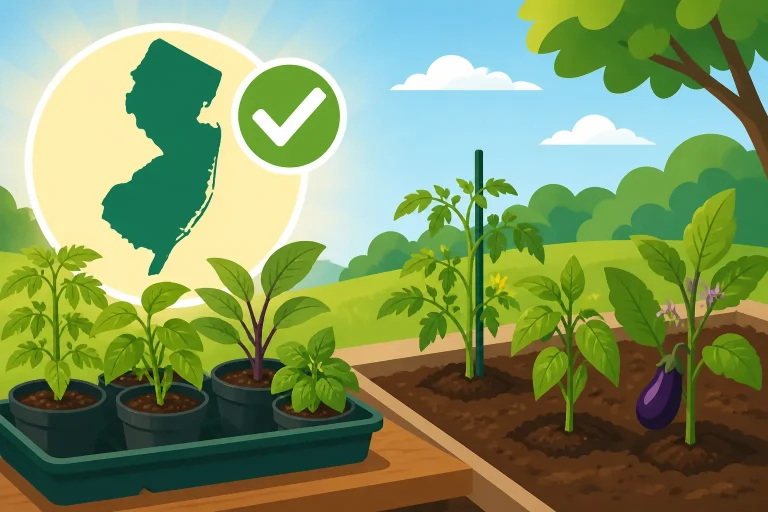
For vegetables, distinguish cool-season crops and tender crops from plants chosen mainly for winter survival. A zone designation does not set a safe outdoor date for tender seedlings. Use a local planting window and current conditions, and protect vulnerable plants when a cold spell threatens. When Tender Crops Can Safely Move Outdoors in New Jersey and Planning Warm vs Cool Season Crops Around Late Spring Freezes offer more focused timing guidance.
Treat a sheltered spot as helpful, not risk-free
A warm microclimate can extend the useful planting options in a particular bed, but it does not guarantee protection from cold. A wall may shelter one side of a plant while leaving the rest exposed. A sunny day can warm a site, while the following night brings different conditions. Avoid making a permanent plant choice based only on a short spell of mild weather.
Use a sheltered location selectively. It may be a reasonable place to try a plant that benefits from extra protection, provided the soil, light, and moisture are also suitable. Keep more vulnerable plants where you can monitor and protect them. If the spot’s conditions are uncertain, trialing a small number of plants is a lower-risk way to learn than filling the whole bed at once.
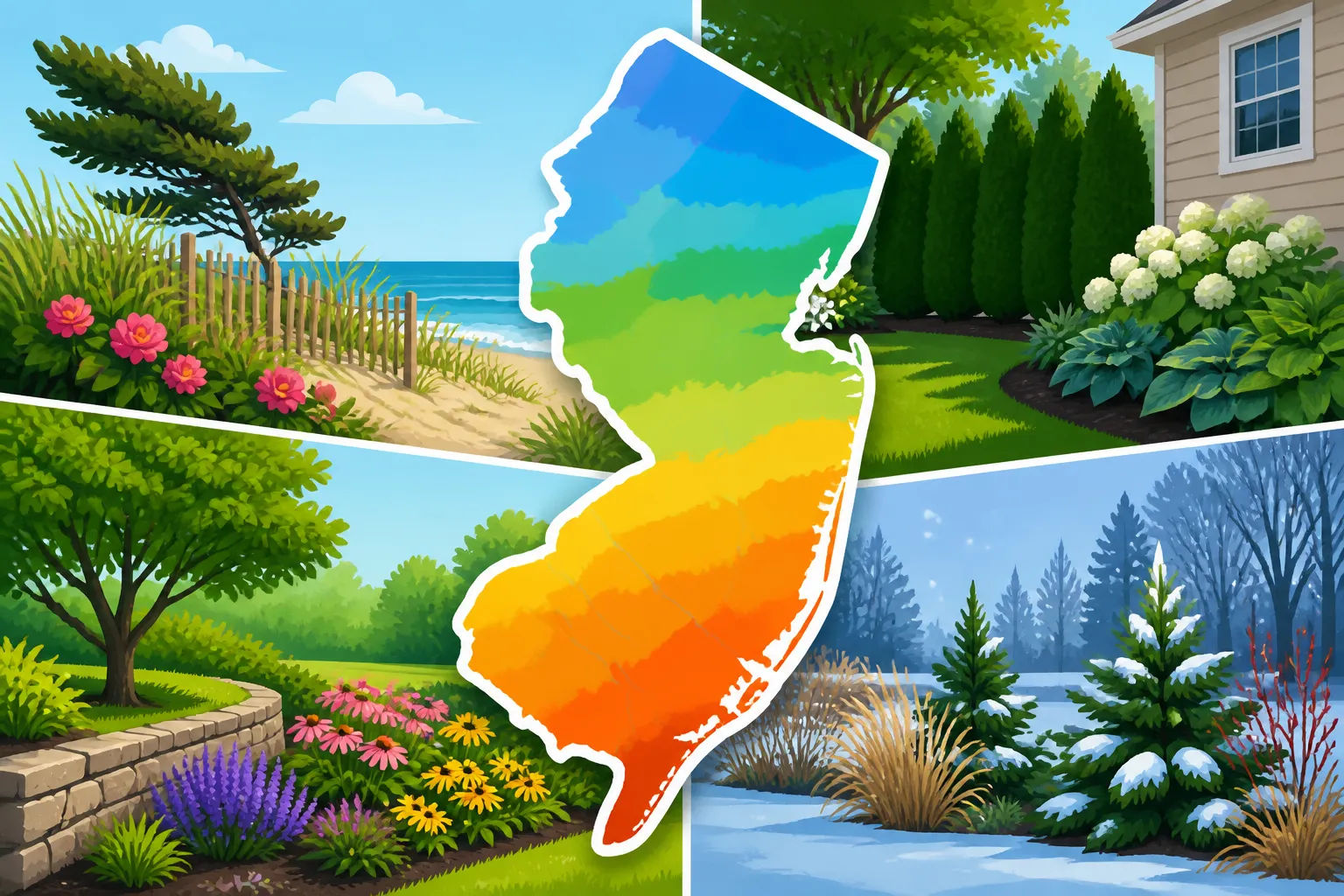
Coastal, urban, and inland settings can each have local variations, but general labels do not describe every garden. A coastal yard may have exposure to wind; an urban yard may include both warm paved areas and shaded courtyards; an inland yard may contain slopes and cold-air pockets. For coastal planting considerations, see Jersey Shore Microclimates: Can You Plant Earlier Near the Coast?. The site-level observations still matter.
Use planting dates as windows, not guarantees
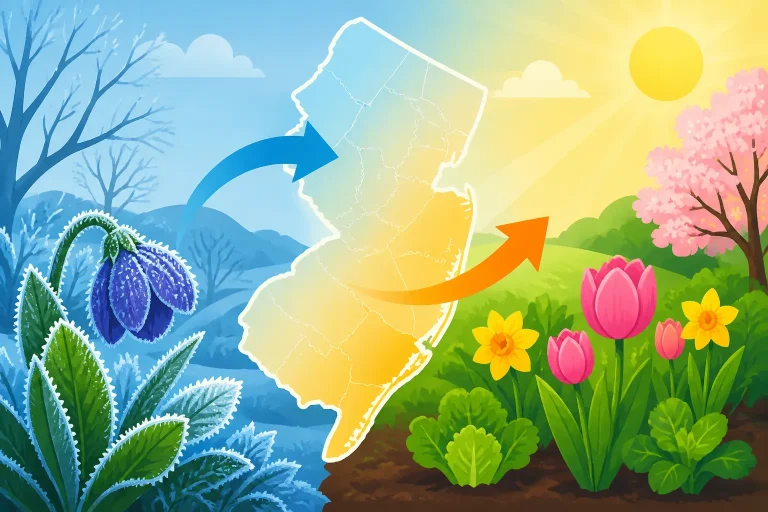
Regional planting guidance helps narrow down when to sow or transplant, but local weather can shift the practical decision. A yard with a protected bed may warm earlier than an open site, while a low spot may remain vulnerable to cold. Do not treat a calendar date as proof that the soil, air, and forecast are suitable.
Check both the crop’s needs and the conditions in the bed. For direct-sown crops, consider whether the soil is ready and whether the seed can tolerate the expected conditions. For transplants, consider their tenderness, how well they have been hardened off, and whether a cold snap is forecast. Timing Spring Garden Beds Around Local Last Freeze Dates can help connect regional timing with local risk.
If the yard repeatedly differs from the broad regional guidance, keep records and adjust future planting decisions gradually. A sheltered bed may allow an earlier trial for a suitable crop, while an exposed bed may call for waiting. Those are site-based choices, not a reason to assume every part of the property has the same growing window.
Frequently Asked Questions
Does a warmer mapped zone mean every garden in town is warmer?
No. The map describes a broad regional pattern, while individual beds can vary with exposure, buildings, wind, soil, and other local conditions. A warm designation is a starting point, not a guarantee for every yard.
Can a microclimate change the hardiness zone of my address?
A microclimate can make a planting spot warmer or colder than nearby areas, but it does not replace the mapped zone for your location. Use the zone as regional context and assess the actual planting site separately.
Why can a low bed have more frost damage than a nearby bed?
Cold air may collect in a hollow or low area under some conditions, while a nearby slope or sheltered spot behaves differently. Observe where frost lingers in your own yard rather than assuming all beds share the same risk.
Is a sheltered bed always better for tender plants?
Not necessarily. Shelter may reduce wind exposure, but a bed can still have unsuitable shade, poor drainage, limited airflow, or other problems. Match the plant to the complete set of conditions, not just the amount of protection.
Sources
- USDA Agricultural Research Service — How to Use the Maps | USDA Plant Hardiness Zone Map (checked November 15, 2026)
- USDA Agricultural Research Service — Map Creation | USDA Plant Hardiness Zone Map (checked November 15, 2026)
Disclaimer
This article is for general informational purposes only and does not constitute professional advice. Laws, prices and regulations vary by location and change over time. Consult a qualified professional for guidance on your specific situation. New Jersey Gardening Guide is not a government agency and is not affiliated with any university extension, state department of agriculture or other government agency.