Month-by-Month Planting Windows Across New Jersey Regions
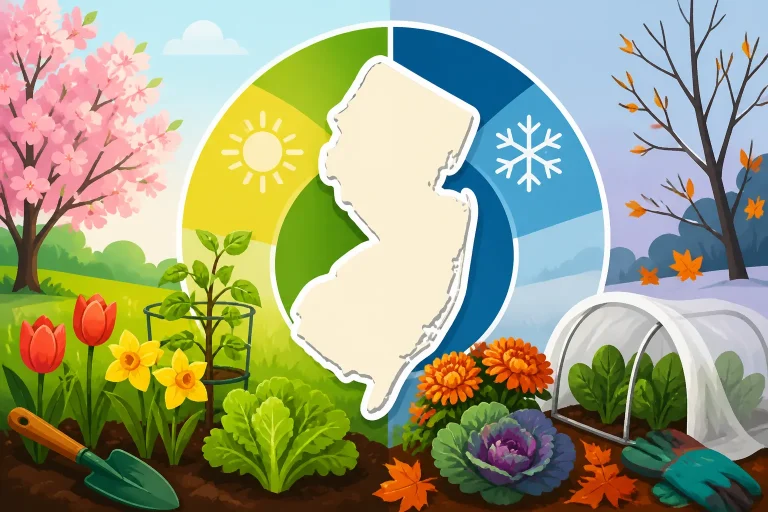
New Jersey’s planting calendar is not one statewide schedule. A crop that can go into a warm, sandy South Jersey bed may still struggle in a chilly northern garden, while a coastal yard can stay mild later in the season. This month-by-month overview shows what to consider in each region and how to adjust for local soil, weather, and growing conditions.
How to use a New Jersey planting calendar
Treat each month below as a planning window, not a guaranteed planting date. New Jersey’s growing conditions vary across short distances: latitude, elevation, distance from the ocean, urban heat, slope, and soil all affect when a bed is ready. A warm stretch can bring an early start, but it does not remove the possibility of a later cold snap.
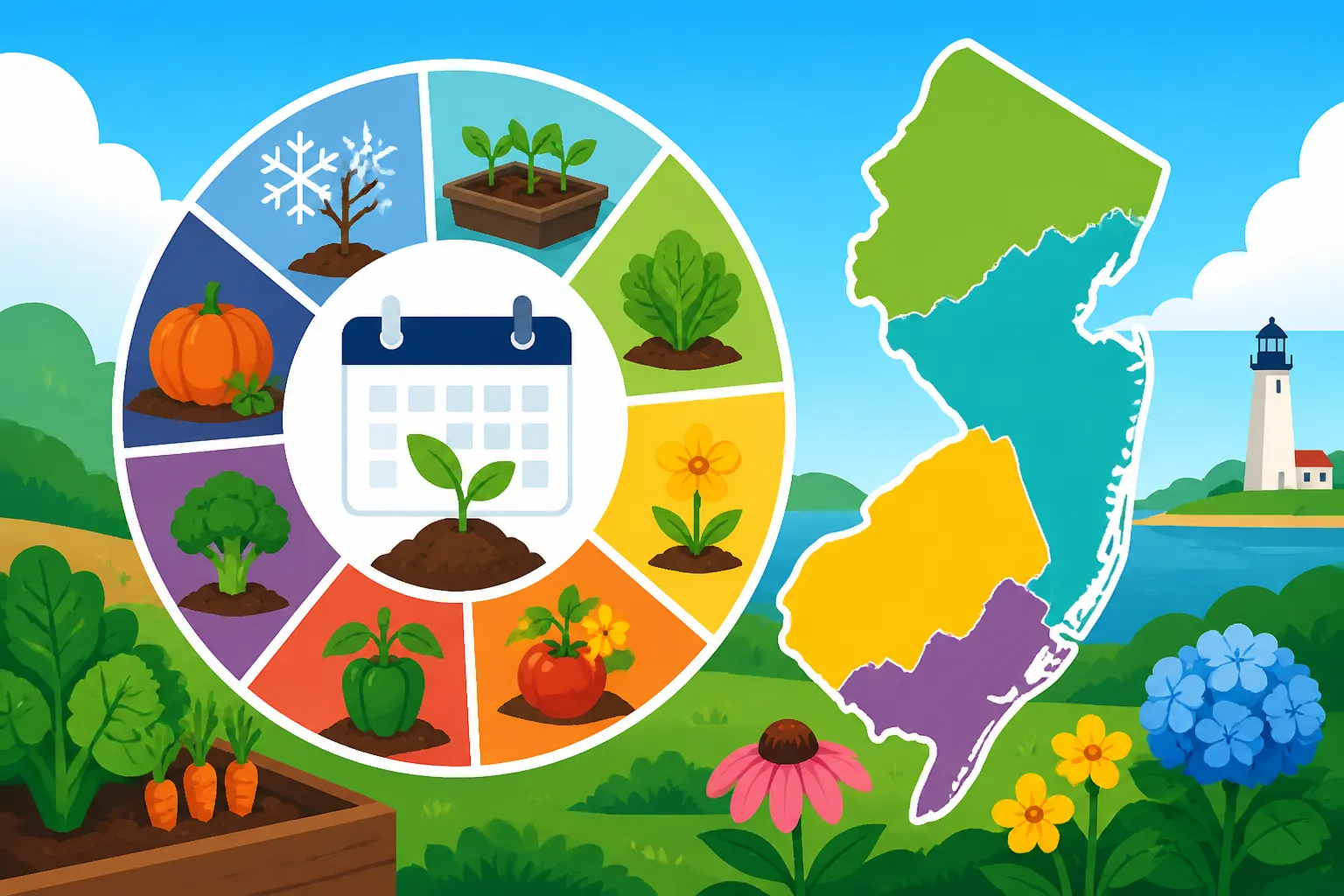
For a useful local plan, think in terms of three broad areas:
- Southern New Jersey and the Coastal Plain: Many locations have sandy or sandy-loam soils that warm and drain relatively quickly. The shore’s maritime influence can moderate temperatures, but coastal wind and cool ocean air can also slow spring warming. Inland areas of the south may warm differently from bayside or oceanfront gardens.
- Central New Jersey: Conditions range from warmer, well-drained sites to heavier or wetter soils and cooler pockets. New Brunswick and other developed areas may have warmer microclimates, while low ground can collect cold air.
- Northern New Jersey and the Highlands: Higher elevations and inland locations can hold winter conditions longer and experience later spring chills than warmer southern sites. South-facing, sheltered beds may warm before exposed slopes or valley bottoms.
These are broad comparisons, not boundaries. One yard can contain a sunny bed that warms early and a shaded, low-lying bed that stays cold. For a closer look at regional differences, see Month-by-Month Planting Windows Across New Jersey Regions is the subject of this article and should not be linked. Instead, check Spring Planting Windows From Cape May to Northwestern Highlands and Microclimates and Zone Discrepancies Across New Jersey Yards.
Hardiness zones help you assess whether perennial plants are likely to tolerate winter, but they do not tell you when to sow vegetables or transplant tender crops. A zone is based on average annual extreme winter temperatures, not the spring frost risk for a particular week. Learn how the distinction matters in USDA Hardiness Zones: What They Mean for Perennials and How to Find Your Exact USDA Zone on the Digital Map.
Before planting, check three things:
- The crop’s temperature needs. Peas, spinach, and other cool-season crops can tolerate chilly conditions better than tomatoes, peppers, and beans. A warm-season crop needs settled warmth, not merely a sunny afternoon.
- The soil’s condition. If soil is cold, saturated, or sticky, wait. Working wet ground can compact it and damage its structure. A handful of soil should crumble rather than smear when it is ready to work.
- The local forecast and bed conditions. Look beyond the day’s high temperature. Nighttime lows, wind, rain, and the forecast for the next several days all matter, especially for transplants.
If you are new to vegetable gardening, it can help to plan a small number of beds and a manageable crop list. Planning Your New Jersey Vegetable Garden From Site to Harvest covers the broader process, while Starting a First Vegetable Garden in New Jersey is useful when you are choosing crops and setting up a first plot.
| Month | Typical planning focus | Regional adjustment |
|---|---|---|
| January | Plan beds, review seed packets, prepare tools | Use the month for planning statewide; outdoor soil is usually not ready for routine sowing |
| February | Start planning indoor seedlings and supplies | Northern and high-elevation gardens may need a longer indoor-starting period |
| March | Watch soil readiness; consider hardy direct-sown crops when conditions allow | South Jersey and sheltered urban beds may open earlier than cold inland or highland sites |
| April | Sow or plant cool-season crops as soil permits | Avoid treating an early warm spell as a signal to plant tender crops |
| May | Continue cool-season sowing; monitor frost risk before warm crops | Coast, valleys, and highlands can differ sharply in nighttime temperatures |
| June | Set out warm-season crops once conditions are reliably suitable; sow successive crops | Heat and drying soil become increasingly important, especially on sandy sites |
| July | Sow selected crops for autumn harvest; protect young starts from heat | Choose crops and maturity times that fit the remaining local season |
| August | Continue fall sowing and transplanting; keep new beds evenly moist | Northern gardens may need to prioritize faster crops; coastal warmth can extend growth |
| September | Plant suitable fall crops and prepare for cooling nights | Use local frost risk and crop maturity needs rather than a statewide cutoff |
| October | Harvest, protect remaining crops, and sow only where the crop can finish | High elevations and inland hollows may cool sooner than coastal or urban sites |
| November | Finish cleanup and plan winter protection | Avoid soil work when beds are wet; use covers only as appropriate for the crop |
| December | Review results and plan next season | Record which beds warmed, drained, or cooled first |
January and February: plan, prepare, and start selectively
January
January is mainly a planning month for outdoor vegetable beds. Frozen ground, cold soil, and winter weather make routine outdoor sowing unsuitable for most home gardens. Use the time to review what grew well, what was crowded, and which beds were difficult to work after rain.
Sketch the garden with the sun and shade in mind. Note where water stands, where wind hits, and which places warm first. A simple record of planting dates, harvests, and cold damage can improve next year’s timing more than a calendar alone. For each crop, check whether it is normally direct-sown, started indoors, or transplanted, and read the seed packet for its temperature and maturity information.
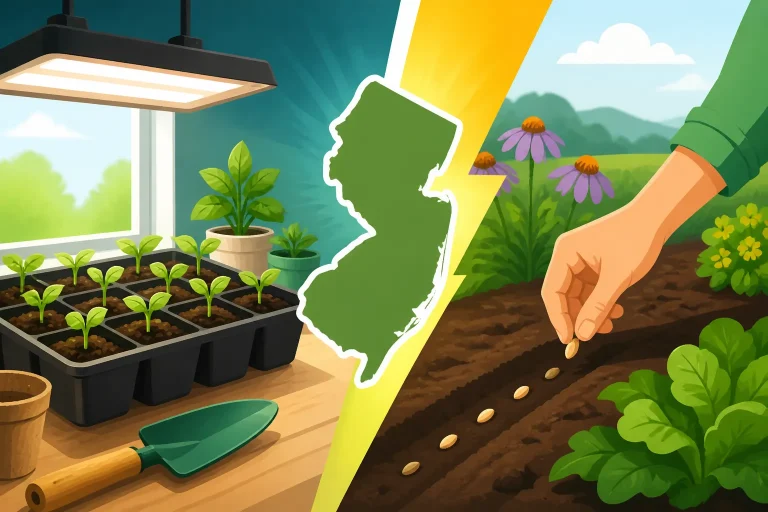
This is also a good month to check seed supplies, clean containers, and decide whether indoor lighting and space are adequate. Starting too early can create large, stressed seedlings that outgrow their containers before outdoor conditions are suitable. A seed-starting schedule should be based on when a crop can safely move outside in your particular region, not on a single statewide date. Starting Seeds Indoors vs Direct-Sowing in New Jersey explains how to choose between the two methods.
February
February remains a planning month, though gardeners may begin sowing some crops indoors when they have a suitable setup and a clear transplant plan. Avoid starting every crop at once. Tomatoes, peppers, and other warm-season plants can become lanky or root-bound if they are started long before the garden is ready for them.
Use this month to check seed packets for maturity information and calculate whether a crop has enough time to produce before autumn cold. That matters especially in the north and in higher elevations, where the usable outdoor season can be shorter. South Jersey gardeners may have more flexibility for some crops, but should still use actual local conditions rather than assume every warm-season crop can go out early.
If you are using a cold frame, greenhouse, or low tunnel, inspect the structure before relying on it. Covers can reduce exposure to wind and cold, but they do not make a crop immune to freezing. On sunny days, enclosed structures can also become too warm. Using Cold Frames and Low Tunnels to Guard Early Spring Starts describes how these structures can support early crops, and Greenhouse Temperature Management for New Jersey Springs discusses temperature swings in protected spaces.
In both January and February, make a list of cool-season crops and warm-season crops separately. This helps prevent a common mistake: using a mild afternoon as a reason to put frost-sensitive plants outdoors. Planning indoor starts and outdoor sowing as separate decisions keeps the calendar flexible.
March and April: start with cool-season crops and workable soil
March
March can bring both promising warm spells and sharp setbacks. In southern and sheltered locations, gardeners may find opportunities to sow hardy crops once the ground is workable. In colder northern and highland gardens, the same month may be better spent preparing beds and watching for conditions to improve.
Peas, spinach, radishes, and some other cool-season crops are common candidates for early direct sowing, but the bed must be ready. Soil that is waterlogged or still frozen is not ready simply because the air feels mild. If the garden soil sticks to tools or smears when handled, leave it alone until it dries enough to crumble. Working it too early can leave clods and compacted areas that are difficult to repair.
For an early sowing, choose a bed that drains well and receives good light. Cold, wet soil can delay germination, and seeds may sit for a long time if conditions remain unfavorable. If part of the garden is exposed to cold air, try a better-drained or more sheltered bed rather than forcing an early planting in the coldest spot.
March is also a good time to prepare a succession plan. Rather than sowing the entire supply of a fast-growing crop in one go, divide it into smaller sowings that can mature at different times. This can extend the harvest and reduce the chance of everything becoming ready at once. Early Spring vs Late Summer Direct Seeding in Central Counties and Direct-Sowing Peas During March and April Ground Windows offer crop-specific timing considerations.
April
April is often an important month for cool-season planting, but the right timing still depends on soil, weather, and location. Many gardeners can direct-sow or transplant hardy crops as beds become workable. Lettuce, carrots, beets, and brassica crops may fit into a spring plan, depending on the crop and whether it is being sown or transplanted.
Do not confuse “spring planting” with “plant everything now.” Tender crops such as tomatoes, peppers, cucumbers, squash, and beans need warmer conditions than hardy greens and roots. An early planting may survive a mild stretch and then stall when cold nights return. In northern New Jersey, highland areas, and inland cold pockets, it is particularly useful to separate the spring cool-crop schedule from the warm-crop schedule.
For crops started indoors, begin hardening plants off before transplanting. Gradually acclimate them to outdoor light, wind, and temperature rather than moving them directly from a protected indoor space into a garden bed. Transplants that have not adjusted can suffer sun or wind damage even when temperatures seem reasonable. See Hardening Off Tender Transplants Before New Jersey Spring Planting.
April conditions can vary widely within a region. A sunny raised bed may warm more quickly than a low, heavy-soil bed, but raised beds can also dry out faster. Coastal air can delay warming near the shore even when inland areas feel milder. When comparing notes with another gardener, compare exposure and soil as well as town or county.
For a crop-by-crop overview of early planting, see Spring Vegetables You Can Plant Outdoors While Frost Lingers and Which Early Spring Crops Belong Directly in the Ground. Keep an eye on forecast lows and avoid assuming that a crop is safe just because it is cool-season; young plants still benefit from appropriate conditions and protection when a sharp cold event is expected.
May and June: shift from spring crops to warm-season planting
May
May is the transition month when many New Jersey gardens move from cool-season planting toward warm-season crops. It is also a month when gardeners can be tempted to plant too much too soon. A warm day is not proof that nighttime temperatures are reliably suitable for tender transplants.
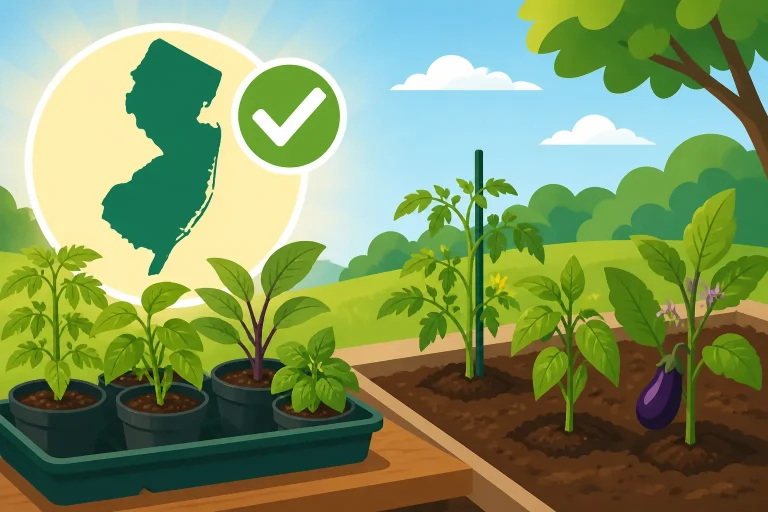
Use the garden’s actual conditions to decide when to set out tomatoes, peppers, eggplants, cucumbers, squash, and similar warm-season crops. Wait for a stretch of conditions that supports active growth, and check the local forecast for cold nights. Northern and high-elevation sites often need more caution than warmer southern locations. The shore may have a moderating influence, but a cool sea breeze or exposed, windy bed can still slow growth.
If you plant warm-season seedlings, choose healthy, well-hardened plants and avoid burying them into cold, wet soil. Water them in as appropriate and monitor them while roots establish. Tender transplants are more vulnerable to a cold snap than established plants. Is Mother’s Day Late Enough to Plant Warm Crops in New Jersey? and Can Late May Frosts Still Threaten Tender Garden Starts? explain why a holiday or calendar date cannot replace local risk assessment.
May can also be a good time to continue sowing warm-season crops directly where they will grow, once the soil is warm enough for reliable germination. Beans and cucumbers are examples, but each crop has its own needs. Check seed instructions and avoid sowing in ground that remains cold or saturated. If you want a more detailed process for transplanting tomatoes, see Transplanting Tomatoes in May and June for High Summer Yields.
Keep cool-season crops in the plan where conditions allow. Lettuce and other greens may still produce well in early May, but rising temperatures can make some crops bolt or become bitter. Planting in a spot with afternoon shade can sometimes extend the picking period, though too much shade can slow growth. Consider harvesting frequently and sowing modest amounts rather than leaving a large spring planting to mature all at once.
June
By June, many gardens are focused on warm-season crops, while early spring plantings are being harvested or cleared. This month is also a useful window for succession planting. A space that has finished with radishes, lettuce, or another short-season crop can be replanted rather than left unused.
The challenge is heat and moisture. Newly sown seeds and young transplants need consistent conditions while they establish. Sandy soils, common in parts of the south, can drain quickly; containers and raised beds may dry even faster than in-ground beds. Check the soil near the root zone rather than watering on a fixed schedule. Watering needs vary with rainfall, wind, soil texture, bed depth, and plant size.
Avoid trying to make a struggling crop recover by adding extra fertilizer without a reason. Poor growth can result from cold soil, water stress, crowding, or root damage, not just a lack of nutrients. A soil test and careful observation are better starting points than a guess. The guide Managing Soil Nutrients and Lime in New Jersey Vegetable Plots addresses soil fertility decisions.
June is a useful month for starting crops that can mature through summer, but match the crop’s days to maturity with your local growing conditions and intended harvest. If you are sowing corn, cucumbers, or other crops in a limited space, account for pollination, trellising, and room to spread. For staggered harvests, sow in batches and keep track of what was planted where.
Continue to watch for unsettled weather. A garden that has moved into summer growth is not automatically safe from every cold event, and young transplants can still be stressed by abrupt changes. For practical protection choices, see When to Cover Tender Garden Vegetables Before Frosty Nights.
July and August: sow for fall while managing summer stress
July
July is not just a harvest month. It is the time to begin planning for autumn crops, especially those that need a longer period to grow before cold weather limits them. The suitable crops depend on how quickly they mature and how much of the local growing season remains. Northern gardens and higher elevations should be especially attentive to maturity information.
Heat can make July sowing difficult. Seeds may fail to germinate evenly if the surface dries, and seedlings can struggle under intense afternoon sun. Prepare the bed before sowing, water it as needed to keep the seed zone from drying, and consider temporary shade for fragile starts during extreme heat. Do not leave covers in place without checking temperatures and airflow; a cover that protects from insects or sun can also trap heat.
Some fall crops are started indoors or in a sheltered spot and transplanted later, while others are direct-sown. Choose the method based on the crop and the conditions. If you start seedlings in containers, do not let them become root-bound while waiting for a bed to open. Make a plan for clearing the earlier crop and setting out the next one.
July successions can include selected roots, greens, and brassicas, but there is no universal list that suits every garden. Match each crop’s maturity requirement to the season left in your location, then allow some margin for slower growth during heat or shorter days. How to Count Days to Maturity for Autumn Harvest in New Jersey explains how to use seed-packet timing, and July Direct Sowing Deadlines for Fall Beets and Chard focuses on particular crops.
August
August is a central month for fall planting. It can be productive, but it is also one of the hardest times to establish seedlings because hot soil and dry spells can undo a sowing quickly. Keep the seedbed evenly moist while seeds germinate, and check new plants frequently until they have established roots.
Rather than sowing a large area at once, prioritize crops that fit your remaining season and planting capacity. Fast-growing greens and roots may be useful, while crops that need a long, uninterrupted stretch may be a poor choice if your garden cools early. In southern and coastal locations, warmer autumn conditions may allow more flexibility; northern or elevated beds should emphasize crops that can mature sooner.
For transplants, aim to reduce stress during establishment. Water the bed before planting if it is dry, transplant in a cooler part of the day when practical, and protect young plants from severe heat and drying wind. Keep weeds from competing for moisture, but avoid disturbing shallow roots when cultivating close to seedlings.
August also presents an opportunity to rethink bed layout. Remove spent spring crops and clear diseased plant material rather than leaving it in place. Replenish soil only according to the needs of the garden and any soil-test guidance; do not assume every vacant bed needs the same amendment. If the bed is dry and compacted, moisture and careful preparation may matter more immediately than adding fertilizer.
Succession sowing can help keep autumn harvests coming. Sow a small amount, then repeat if the first planting establishes well and there is enough time for another round. The interval should depend on crop growth, weather, and available bed space rather than a rigid schedule. See Succession Planting Intervals for Continuous Fall Harvests and Direct-Sowing Greens and Roots for Autumn Harvests in New Jersey.
September and October: extend harvests and plan around cooling nights
September
September can bring a welcome shift from summer heat, but the length and warmth of autumn differ across New Jersey. The shore and some urban settings may remain milder than exposed inland sites, while highland gardens can cool sooner. Do not base a fall planting decision only on the month; use the crop’s expected maturity, the local outlook, and the conditions in the bed.
Many fall crops benefit from cooler weather once they are established. Continue watering newly sown beds when rain is insufficient, and protect young seedlings from insects or other damage as appropriate. If a crop has not germinated or grown well, identify the likely cause before repeating the same sowing. Dry surface soil, excessive heat, poor seed-to-soil contact, and competition can all interfere.
September is also a sensible time to harvest mature summer crops and clear space for later plantings. Pick fruit and vegetables regularly where that encourages continued production, and remove plants that are finished or diseased. Make space for the crops that are most likely to produce before colder conditions arrive rather than trying to keep every plant going.
For fall crops, the key question is not only whether the plant can tolerate cold, but whether it has enough time to reach the stage you want to harvest. A leafy crop may provide usable leaves before it reaches full size; a root crop may need more time in the soil. Use realistic expectations and avoid assuming that all varieties or planting methods take the same time. Late Summer Sowing for New Jersey Carrots and Beets and Starting Fall Brassicas in Summer for Autumn Heading provide more crop-specific information.
October
October is a month for harvesting, protecting, and making selective late-season decisions. In some locations, cool-season crops can continue producing, especially when they are established and the weather stays mild. In colder inland or higher-elevation gardens, the window may be narrower. Coastal and urban gardens may retain warmth longer, but local exposure still matters.
Check the forecast before deciding whether to cover tender crops. Covers can help buffer plants, but they need to be suited to the situation and managed properly. A cover left in place during a sunny day can overheat plants, while one that is loose or poorly secured may not provide the protection expected. See When to Vent Plant Covers and Row Tunnels in Early Morning for guidance on managing protected crops.
Harvest crops that are ready rather than waiting for a calendar milestone. Some vegetables tolerate cool conditions, while others lose quality or become vulnerable as temperatures fall. For crops still in the garden, decide whether to harvest, protect, or leave them based on their sensitivity and the likely conditions.
October can also be a good time to record what the season taught you. Note which varieties matured on time, which beds stayed too wet, and where cold air settled first. These observations help distinguish a regional pattern from a one-off weather event. If frost regularly affects one corner of the yard before another, move sensitive crops or use that area for hardy crops in future seasons. Why Low Spots in a New Jersey Yard Frost First explains how terrain affects cold-air movement.
November and December: finish the season and prepare for the next one
November
November is generally a transition away from active vegetable planting and toward harvest cleanup and garden maintenance. Some hardy crops may remain in the bed, depending on location and weather, but planting decisions should be conservative. Cold nights, shorter days, and increasingly cool soil slow growth, so newly planted crops may not have enough time to establish or produce.
Harvest remaining crops when they are ready and remove plants that are finished or affected by disease. Do not compost or leave diseased material in place unless you know it can be handled safely in your composting system. Clear paths and store supports or equipment that could be damaged by winter weather.
If you mulch beds, consider soil temperature and moisture. Applying a thick layer while the soil is still warm or wet may not suit every situation. Mulch is useful for protecting soil and reducing erosion, but it should not be treated as a substitute for drainage or sound bed management. New Jersey Mulching Practices for Beds and Trees offers broader advice on choosing and applying mulch.
Avoid working wet soil. Late-season rain can leave beds too soft to dig or turn without causing compaction. If the ground is wet, wait for it to dry rather than rushing to finish a garden task. The same principle applies to raised beds and paths: avoid making unnecessary disturbance when soil structure is vulnerable.
December
December is a good time to review the season and prepare a practical plan for the next one. The most useful notes are often simple: when the soil first became workable, which crops were delayed by cold, where water pooled, and which beds stayed productive during heat. Local observations can refine a general calendar over time.
Decide whether to rotate crops, change the bed layout, or reduce the number of plantings. Rotation is not a guarantee against every pest or disease, but changing plant families among beds can help avoid repeatedly placing related crops in the same area. Make a rough plan that leaves room to adjust for weather.
Check stored seeds and supplies, but follow applicable product or seed-label directions for storage and use. Replace anything that has deteriorated, and keep notes about what you need before spring shopping begins. If you plan to start seedlings indoors, work backward from the expected outdoor window for each crop and allow time for hardening off.
A successful calendar is a flexible system, not a set of dates to obey. Use monthly windows to decide what to prepare, then let soil, forecast, crop needs, and your particular yard determine the final step. That approach is especially useful in New Jersey, where a difference in elevation, coast distance, or drainage can shift the season even between nearby gardens.
Frequently Asked Questions
Is there one planting calendar for all of New Jersey?
No. Southern, central, coastal, and northern locations can differ in soil warming, frost exposure, and autumn cooling. Use a regional overview as a starting point, then adjust for your yard’s elevation, drainage, exposure, and local forecast.
When should I plant tomatoes and other warm-season crops?
Plant them when conditions are reliably warm for active growth, not just after one mild day. Check nighttime forecasts, soil conditions, and the needs of the crop. Tender plants may need protection if a cold snap is forecast.
Can I plant vegetables before the last spring frost?
Some hardy cool-season crops can be planted while frost remains possible, but tender warm-season crops are more vulnerable. Crop tolerance, plant age, and protection all matter. For local frost context, see First and Last Frost Dates Across New Jersey Regions.
How do I know if my garden soil is ready to work?
Check the soil itself. If it is saturated, sticks heavily to tools, or smears when handled, wait. Soil that crumbles more readily is generally easier to work without damaging its structure.
How can I make a fall planting plan?
Choose crops that can mature in the time left in your local season. Use maturity information as an estimate, allow for slower growth as days shorten, and prioritize crops suited to your conditions. Late-Season Sowing Guide: New Jersey Fall Vegetable Harvests provides more detail.
Disclaimer
This article is for general informational purposes only and does not constitute professional advice. Laws, prices and regulations vary by location and change over time. Consult a qualified professional for guidance on your specific situation. New Jersey Gardening Guide is not a government agency and is not affiliated with any university extension, state department of agriculture or other government agency.