Why Last Spring Frost Shifts Six Weeks Across New Jersey
New Jersey gardeners can be ready to plant in one part of the state while frost is still a risk elsewhere. The challenge is knowing what a statewide last-frost range can—and cannot—tell you about your own garden. Here’s why the timing shifts, how to read the dates, and how to plan crops around local conditions rather than a single calendar day.
What the statewide frost range means
The last spring frost is a planning reference, not a promise that freezing weather will not return. It describes when frost danger tends to ease, but the actual timing varies from year to year and from one garden to another. That distinction matters in New Jersey, where a statewide range covers places with different landscapes and local conditions.
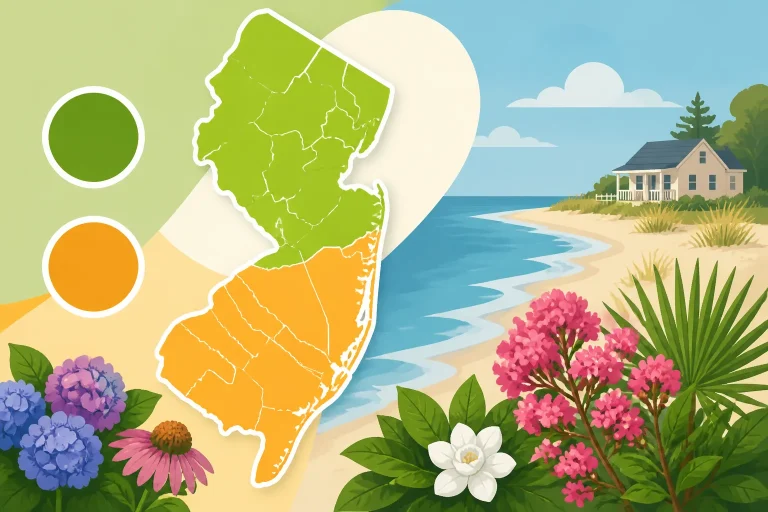
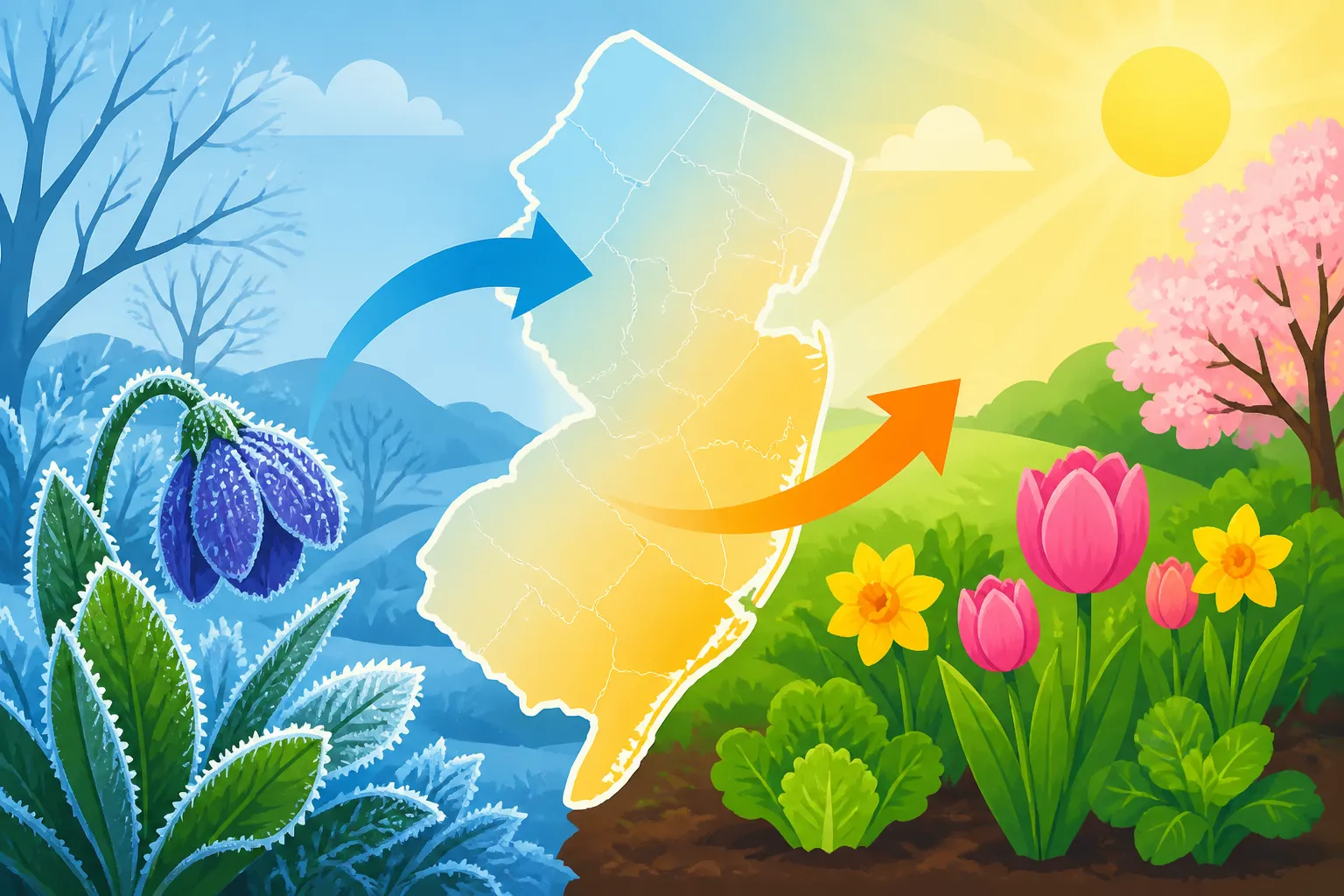
According to Rutgers Cooperative Extension, warm-season vegetables should wait until frost danger has passed—April 20 in extreme southern New Jersey to June 1 in the colder northwest—while cool-season crops can usually be planted in mid-to-late April.
Those endpoints are useful for understanding the scale of the timing difference, but they are not a schedule for every community between them. The source does not give separate dates for inland and coastal areas, and a statewide range does not tell you the exact risk at a particular yard. It also does not mean every garden in the south is ready on the earliest date or every garden in the northwest must wait until the latest one.
A frost date is best treated as a starting point for a decision. Your location, the position of the garden, the forecast, and the crop you want to plant all matter. The date can help you decide when to start paying close attention, but it cannot remove the need to assess conditions as planting time approaches.
It also helps to separate frost risk from the broader question of whether a plant is ready to grow outdoors. A frost-sensitive vegetable may be damaged by a cold night, while cool-season crops can often handle conditions that would set back tender transplants. Even when frost is unlikely, cold soil or unsettled weather can make a warm-season crop struggle. A calendar date is only one part of the decision.
For a closer look at how regional planting windows fit together, see Month-by-Month Planting Windows Across New Jersey Regions. If you are trying to interpret the range in relation to your own location, First and Last Frost Dates Across New Jersey Regions offers a useful companion topic. The key is to use regional guidance as context, then account for the conditions where you actually garden.
Why spring frost timing changes across New Jersey
A state does not warm evenly in spring. Sunlight, elevation, terrain, nearby water, and the layout of the surrounding landscape all influence how quickly an area loses its winter chill. The differences can be significant enough that gardeners in separate parts of New Jersey need different planting plans.
The broad contrast in the Rutgers range reflects regional variation, including the colder conditions associated with the northwest and the earlier frost-danger transition in extreme southern New Jersey. It should not be read as a smooth, predictable progression from one end of the state to the other. Weather systems do not move through the state on a fixed gardening timetable, and local terrain can create conditions that differ from the larger region around it.
Latitude and broader regional patterns
New Jersey stretches across a range of locations, and regional patterns help explain why spring does not arrive at the same time everywhere. But latitude alone does not determine a garden’s last frost. Two places at a similar distance from the southern end of the state may still have different exposure, elevation, nearby landforms, or built surroundings.
The same caution applies when comparing towns. A regional frost reference is an overview, not a guarantee that every yard in the region shares identical conditions. If two gardeners use a broad regional date, one may find that the garden warms earlier while the other continues to get chilly nights. That is a reason to observe the site, not a reason to assume the regional information is useless.
Elevation and terrain
Higher ground can remain colder than nearby lower areas, and hillsides may experience different conditions from valleys. Terrain also affects how cold air moves. On calm, clear nights, cooler air can settle into low areas, so a garden at the bottom of a slope may face more frost risk than a site higher up.
The effect is not always easy to see from a map. A yard can have a low pocket, a shaded hollow, or an exposed slope that changes how it responds to cold nights. A gardener may notice that frost lingers in one section while another patch of the same property appears to warm more quickly. Those observations can be more useful for a particular bed than a broad regional label.
For a deeper explanation of this pattern, see Why Low Spots in a New Jersey Yard Frost First. Gardeners in hilly areas may also find Highland Freeze Normals: Why High Elevations Face Late Chills helpful for understanding why a regional calendar can feel late compared with conditions in a more sheltered part of the state.
Nearby water and coastal influence
Large bodies of water can moderate nearby temperatures, but the influence varies with distance, wind, and the shape of the surrounding landscape. A coastal garden may not behave exactly like an inland one, and two coastal sites can differ too. The water’s effect is not a guarantee of frost-free nights, nor does it make every nearby garden ready for tender vegetables at the same time.
That is why it is important not to turn the statewide endpoints into a detailed coastal schedule. Rutgers does not provide separate inland and coastal dates in the guidance summarized here. A gardener near the shore can consider the possibility of a local maritime influence while still checking local weather and watching the garden’s own conditions.
For more on how coastal conditions can affect planting decisions, see Jersey Shore Microclimates: Can You Plant Earlier Near the Coast? and Coastal Garden Planting Dates: Balancing Mild Air and Sandy Soil. These topics can help frame local observations, but no broad coastal label should replace a current forecast or site-specific judgment.
Urban areas and built surroundings
Buildings, pavement, walls, and other hard surfaces can change how a garden absorbs and releases heat. A sheltered bed near masonry may warm differently from an open plot, and a garden surrounded by dense development may experience different conditions from a nearby exposed field. The size and direction of those effects vary with the site.
A warm-feeling patio in the afternoon does not prove that a nearby bed is safe from a late frost. Sun can heat a wall or paved surface during the day, but plants still face the temperatures and exposure they encounter overnight. The conditions at plant level matter more than the sensation of warmth while you are standing in the sun.
An urban setting can also create sharp differences within a short distance. A sunny, wind-protected bed may warm sooner than a shaded one, while an open rooftop or exposed yard may be more vulnerable to cold air and wind. Urban Heat Island Effects on Metro Planting Calendars looks more closely at why city conditions do not always match the surrounding region.
Why a regional date cannot predict your garden’s last frost
A regional date is an average or reference point, not a promise about the next spring. Weather varies, and a late cold night can occur after a stretch of mild days. Warm afternoons can make the garden feel ready, but they do not settle the question of what will happen overnight.
There are several reasons the regional date may not line up neatly with what you see at home:
- The reference covers a broad area. A region can include exposed sites, sheltered yards, slopes, low spots, and built-up neighborhoods.
- Local topography changes cold-air movement. A hollow or low section may stay colder than a nearby rise.
- The garden may have different sunlight and shelter. Shade, walls, trees, and wind exposure influence how quickly a site warms and how cold it becomes overnight.
- Weather changes from one spring to another. A typical planning date cannot forecast the pattern of a particular season.
- Plant sensitivity differs. A crop that tolerates cool conditions may be suitable outdoors while a frost-sensitive crop still needs protection or a later planting.
Microclimates are the smaller conditions created by a particular yard or planting area. They do not make a garden independent of regional weather. A sheltered bed may warm earlier on some days, but a cold outbreak can still affect it. A frost pocket may remain vulnerable even when nearby gardens are already growing.
If the same part of your yard repeatedly stays colder, keep that in mind when deciding where to place early crops. If another bed dries and warms sooner, it might be a better place for a first sowing of cool-season vegetables. Site observation helps refine a regional calendar, but it does not turn a tendency into a guarantee.
For a focused overview of those within-yard differences, see Microclimates and Zone Discrepancies Across New Jersey Yards. Hardiness zones can help when choosing perennial plants, but they answer a different question from spring frost timing. The USDA Plant Hardiness Zone Map is not a substitute for a local spring planting forecast; USDA Hardiness Zones: What They Mean for Perennials explains what those zones are designed to convey.
How to use frost information when planning spring planting
A useful calendar combines regional guidance with what is happening at your site and in the forecast. Instead of treating a date as a command to plant, use it as a cue to review conditions and decide whether a particular crop is ready to go outdoors.
Start with the crop, not just the date
First, sort the crops you plan to grow by how they respond to cold. Cool-season crops are generally a better fit for early spring conditions than frost-sensitive warm-season vegetables. The guidance from Rutgers reflects that difference: cool-season crops can usually be planted earlier, while warm-season vegetables should wait until frost danger has passed.
That distinction prevents a common mistake: assuming that because one vegetable can go in the ground, every vegetable can. Early greens and other cool-season crops can be planted while frost remains a concern, but that does not make the same timing appropriate for tender plants. Spring Vegetables You Can Plant Outdoors While Frost Lingers and Which Early Spring Crops Belong Directly in the Ground can help you think through the difference between crops that tolerate early conditions and crops that should wait.
A crop’s ability to tolerate cold is not the only factor. A seed or transplant still needs conditions that support establishment. Cold, wet ground can slow growth, and a plant that survives a chilly spell may still be checked by it. Think in terms of suitable conditions, not simply survival.
Use the regional range as a planning boundary
The Rutgers endpoints indicate that spring frost danger does not end at one statewide moment. If you are at the colder end of the state, an early date for extreme southern New Jersey should not be treated as your signal to set out warm-season vegetables. If you garden in the south, the statewide range still does not tell you exactly what will happen in your yard on a given night.
Instead, use the range to frame your expectations. A gardener can prepare beds, review seed packets, and make a planting plan before the crop is ready to go outside. Then, as the relevant local frost period approaches, watch the forecast and assess whether the site is warming steadily. For location-specific context, How to Look Up Local Freeze Probabilities Across New Jersey and Finding Your Exact Zone and Freeze Dates Using Your ZIP Code are useful next reads.
Avoid assigning yourself a date by dividing the statewide span into equal pieces or assuming that neighboring towns must fall at predictable points between the two endpoints. The source does not provide a formula for that. Local weather records, forecast information, and the behavior of your own site give a more responsible basis for a decision than a guessed midpoint.
Match the decision to the planting method
Direct-sowing seeds and transplanting young plants are not interchangeable. Seeds sown outdoors face the conditions of the soil and air where they are planted. Transplants have already begun growing and can be more exposed to a sudden change when moved outdoors. The right timing depends on the crop and how it will be started.
For crops suited to direct sowing in cool conditions, it may be possible to begin while frost danger remains, provided the crop and site are appropriate. For tender transplants, postponing the move outdoors can be the safer choice. A plant that was started indoors needs time to adapt to outdoor light, wind, and temperature changes; moving it outside all at once can add stress even when frost is not in the forecast.
Starting Seeds Indoors vs Direct-Sowing in New Jersey compares those approaches, while Hardening Off Tender Transplants Before New Jersey Spring Planting covers the transition from protected growing conditions to the garden. If you are buying plants rather than raising them, How to Choose Healthy Vegetable Transplants at Local Nurseries offers help with choosing sturdy specimens.
Keep a flexible planting plan
A flexible plan gives you useful work to do without forcing a risky planting. You can prepare beds, organize supports, check irrigation, and get seeds or supplies ready before conditions are settled. If the forecast turns colder, you have options: hold the plants, cover suitable crops when appropriate, or shift your attention to work that does not depend on tender plants being outdoors.
It is sensible to divide planting into stages rather than trying to put everything into the garden at once. Cool-season crops and warm-season crops have different needs, and even crops within one group may not be ready at exactly the same time. Staggering work can reduce the chance that one cold night damages every tender planting.
The calendar should also leave room for a delay. If the ground is cold, saturated, or difficult to work, waiting can help avoid compacting soil or setting plants into poor conditions. A missed early weekend is usually less important than giving a new planting a suitable start. When Spring Soil Dries Enough to Till Without Forming Clods and Planting Cool-Season Transplants in Mid to Late April offer related considerations for timing garden work.
Choosing what to plant while frost is still possible
The presence of frost risk does not mean the garden must remain empty. It means matching the planting to the conditions and being realistic about what may need protection. Cool-season crops are generally the more appropriate choice for the earlier part of the spring calendar, while frost-sensitive vegetables should wait for a safer transition.
Cool-season crops
Cool-season vegetables are grown for their ability to establish in cooler weather. Their suitability does not mean they are immune to all cold injury, and it does not guarantee good growth in every soil or yard. But they are often a better choice than warm-season crops when spring nights remain chilly.
Gardeners can use this period to sow or transplant crops that are suited to early conditions, while keeping an eye on weather changes. Consider the crop’s instructions, the condition of the soil, and the exposure of the bed. A sheltered location may be useful for an early planting, but it should not be treated as a substitute for knowing the plant’s cold tolerance.
Planning early crops can also make better use of the season. Some gardeners use a bed for cool-season vegetables and later transition it to warm-season crops. That approach requires attention to harvest timing and the needs of the next planting, but it avoids treating spring as a single all-or-nothing event. Succession Sowing Salad Greens From Early Spring to Late Summer and Planning Spring and Late-Summer Successions for Fall Harvest explore ways to organize multiple plantings.
Warm-season vegetables
Warm-season vegetables are more vulnerable to frost and cold conditions. Rutgers advises waiting until frost danger has passed before planting them outdoors. That caution is especially important for tender transplants, which may be set back by cold even if they do not appear damaged immediately.
A mild afternoon is not enough evidence that the risk has ended. Check the forecast for the garden’s location and look for a stable pattern rather than relying on one warm day. If cold nights remain possible, keep tender plants protected and delay setting them out. If you have already prepared the bed, there is no need to plant immediately just because it is ready.
Gardeners who want a crop-specific plan can compare Planning Warm vs Cool Season Crops Around Late Spring Freezes with Safely Transplanting Warm-Season Vegetables After Frost Risk Ends. For tomatoes in particular, Protecting Tomato Transplants From a Late New Jersey Cold Snap discusses the risk of a cold return after planting.
Direct sowing and transplants
A seed planted directly outdoors experiences the garden’s conditions from the start. A transplant has a different history: it may have grown in a protected indoor space or nursery environment and must adapt to the new setting. That difference affects how you prepare and when you move plants outside.
With direct sowing, consider whether the seed is suited to cool soil and whether the bed is workable. A wet or compacted seedbed can create problems unrelated to frost. With transplants, consider both frost danger and the transition to outdoor conditions. Hardening off helps plants adjust to changes in sunlight, air movement, and temperature, but it does not make a frost-sensitive plant frost-proof.
If a cold night is forecast, do not assume that a recently hardened transplant is safe simply because it has spent time outdoors. Hardening is an adjustment process, not a guarantee against freezing weather. When to Cover Tender Garden Vegetables Before Frosty Nights can help you think through protective measures, and When to Vent Plant Covers and Row Tunnels in Early Morning addresses the need to manage covers as conditions change.
Building a garden calendar that can adapt
A practical spring calendar is a set of decision points, not a list of fixed promises. It helps you prepare ahead, separate crops by their needs, and change course when the weather does not cooperate. In a state with a broad regional frost range, that flexibility matters more than finding one perfect date.
Record what happens in your own yard
Keep notes about where frost appears first, which beds warm quickly, and which areas remain damp or shaded. Record what you planted and how it responded. Over time, those observations can help you decide whether a certain bed is reliable for an early crop or better reserved for later planting.
Pay attention to differences within the property. A low area may collect cold air. A bed beside a structure may be sheltered from wind but still experience a cold night. A sunny patch may warm earlier, while a shaded bed may lag behind. These patterns can guide where you place crops, but they should be checked against the weather each spring rather than treated as permanent rules.
A simple garden map can help. Mark sunny and shaded areas, slopes, low spots, walls, and exposed edges. Note which locations seem to dry and warm sooner. You do not need to turn the map into a precise temperature forecast. Its purpose is to help you make better comparisons within your yard.
Watch the forecast as planting approaches
Regional frost dates describe planning expectations; a forecast helps with immediate decisions. As planting time nears, check conditions for the location where you garden. A forecast for a nearby town may not capture every detail of your yard, especially where terrain and built surroundings create local differences, but it is more relevant to a specific planting decision than a calendar date alone.
Look beyond daytime warmth. Overnight conditions are central to frost risk, and a clear, calm night can affect a low spot differently from a breezy or cloudy one. Forecasts can change, so continue checking rather than treating an early outlook as final. If tender crops are already outside, be prepared to respond to a cold warning using appropriate protection.
For a more local planning approach, see Timing Spring Garden Beds Around Local Last Freeze Dates. The most useful practice is to combine forecast information with the crop’s tolerance and the conditions you have observed in the garden.
Protect plants without relying on protection as a planting date
Row covers, cloches, cold frames, and other covers can help manage exposure, but they are not permission to ignore frost risk. Protection varies by design, installation, and conditions. Covers may need to be secured, monitored, or adjusted, and they can create unwanted heat buildup when the weather changes.
Use covers as one part of risk management, not as a reason to plant tender vegetables far earlier than recommended. Keep an eye on conditions beneath a cover, and learn how to open or vent the structure when appropriate. A cover that remains closed during warming conditions can create a different problem from the cold it was intended to limit.
Using Cold Frames and Low Tunnels to Guard Early Spring Starts explains how these structures can support early crops. For people already using a protected growing space, Greenhouse Temperature Management for New Jersey Springs and When to Open Cold Frames and Tunnels on Warming Spring Days offer related planning advice.
Leave room for a late cold spell
Gardeners often feel pressure to plant as soon as the weather turns pleasant. The problem is that a warm stretch can arrive before the risk has passed. Waiting to plant a tender crop is not wasted time if it prevents cold injury or a difficult recovery.
You can reduce the stakes by avoiding a single large planting on one weekend. Set out a portion when conditions are suitable, then continue as weather allows. If your schedule requires planting everything at once, be especially careful to verify conditions and prepare a backup plan for protecting the most vulnerable crops.
It is also worth considering what a delay means for the harvest. Some crops have a longer growing period than others, and postponing planting can affect when they mature. That does not make planting into frost risk the better option. Instead, compare the crop’s growing needs with the remaining season and choose varieties or planting plans that suit your conditions. For a closer look at maturity timing, see How to Count Days to Maturity for Autumn Harvest in New Jersey.
Think in seasons, not a single planting day
A garden calendar works best when it treats spring as a transition. Cool-season crops can make use of the earlier part of that transition, while warm-season crops follow when frost danger has passed. Later plantings can continue through summer and into fall, depending on the crop and local conditions.
This approach helps with both planning and expectation. A cold spring does not mean the entire season is lost, and an early warm spell does not mean every crop should be planted. A flexible schedule leaves room to respond to the actual conditions of the bed and the crop instead of forcing every decision onto a single date.
For a broader calendar framework, Planning Your New Jersey Vegetable Garden From Site to Harvest brings together site choice, crop planning, and season-long decisions. Use that kind of overview alongside local frost guidance, not in place of it.
Frequently Asked Questions
Does the earliest date in the statewide range apply to every southern garden?
No. It is a regional endpoint, not a guarantee for every yard. Local terrain, exposure, and current weather can affect frost risk, so use the date as context and check conditions at your site.
Can cool-season crops go outside before warm-season vegetables?
Often, yes. Cool-season crops are generally better suited to early spring conditions, while frost-sensitive warm-season vegetables should wait until frost danger has passed. Check each crop’s needs before planting.
Does a coastal location guarantee an earlier planting date?
No. Nearby water can influence local conditions, but its effect varies by site and weather. The Rutgers guidance summarized here does not provide separate dates for inland and coastal areas.
Is a warm afternoon enough to decide that frost danger is over?
No. A warm day does not rule out a cold night. Check the forecast for the planting location, consider the crop’s sensitivity, and avoid relying on a single pleasant afternoon.
Sources
- Rutgers Cooperative Extension — Starting Vegetable Seeds Indoors (checked November 15, 2026)
Disclaimer
This article is for general informational purposes only and does not constitute professional advice. Laws, prices and regulations vary by location and change over time. Consult a qualified professional for guidance on your specific situation. New Jersey Gardening Guide is not a government agency and is not affiliated with any university extension, state department of agriculture or other government agency.